1980s
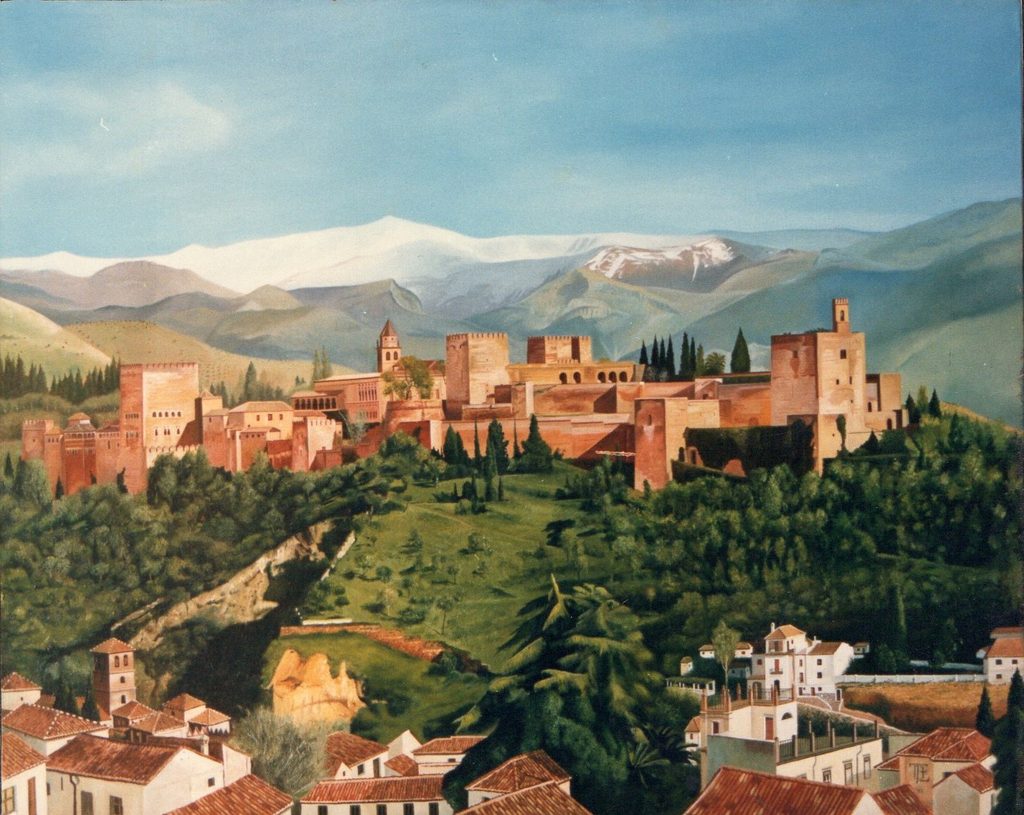
La Alhambra. 1980.
Oil on canvas. 54 x 65 cm.
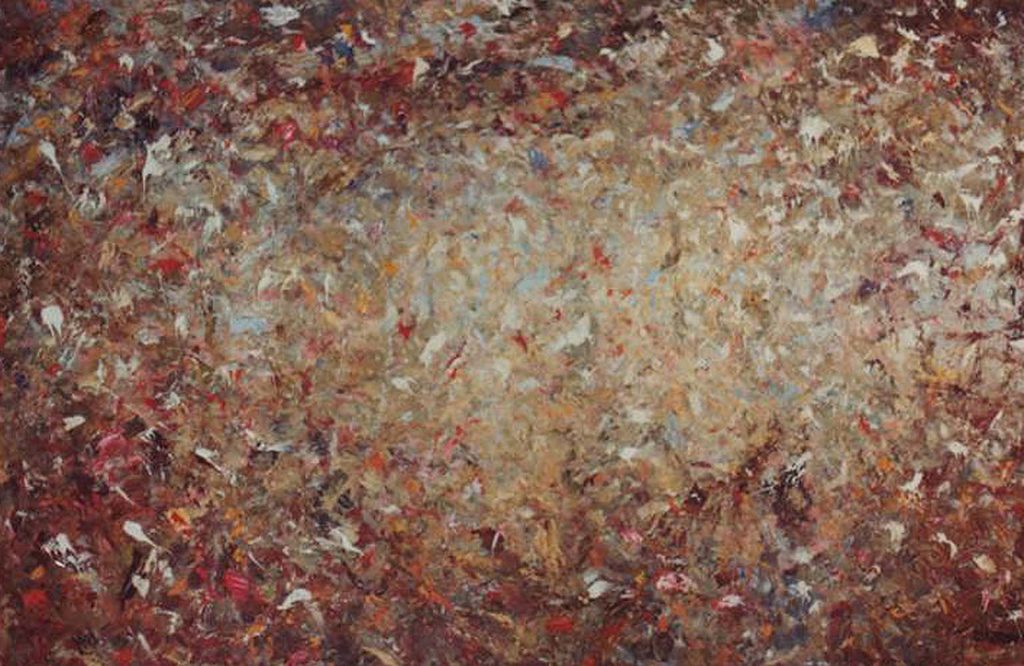
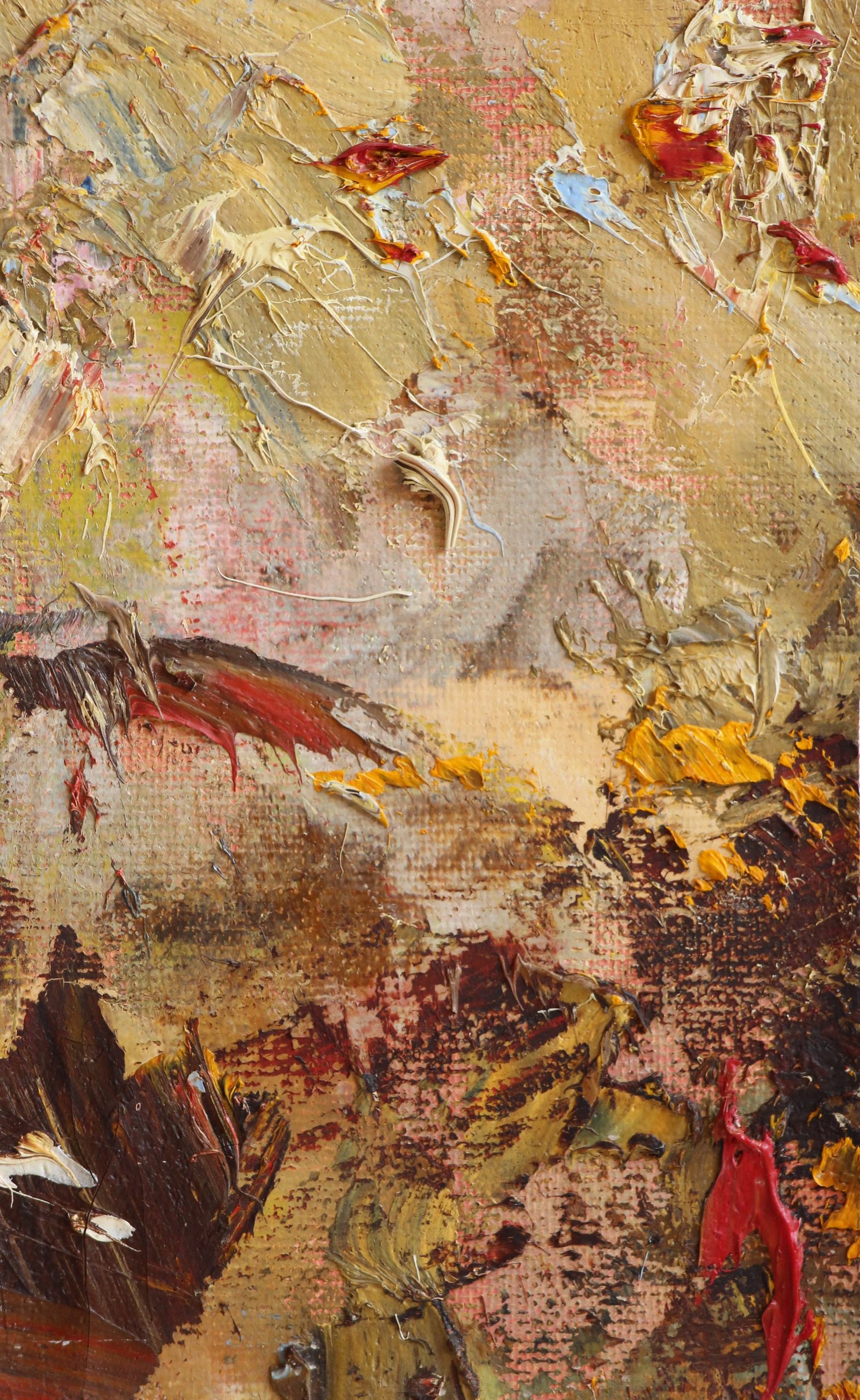
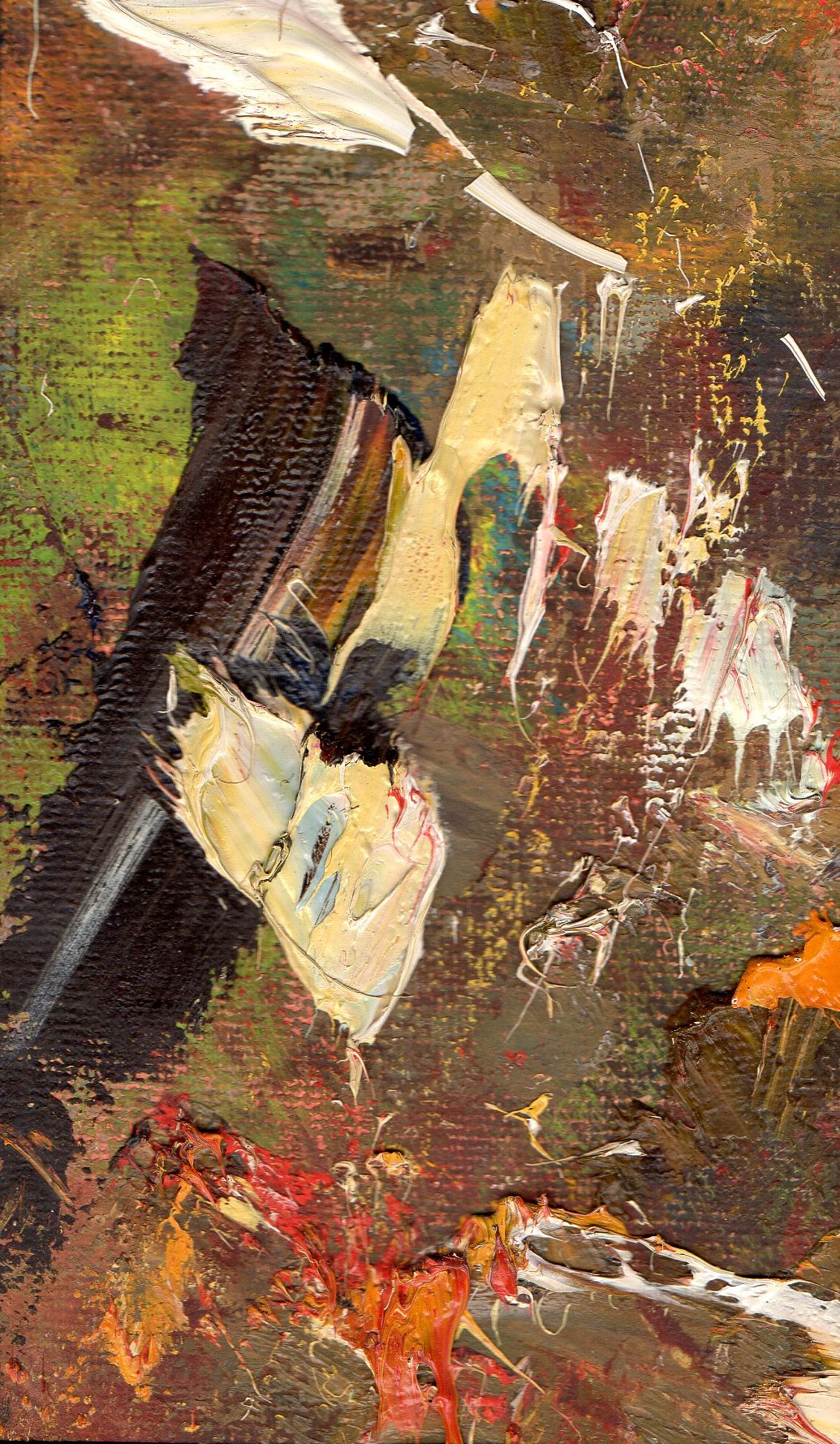
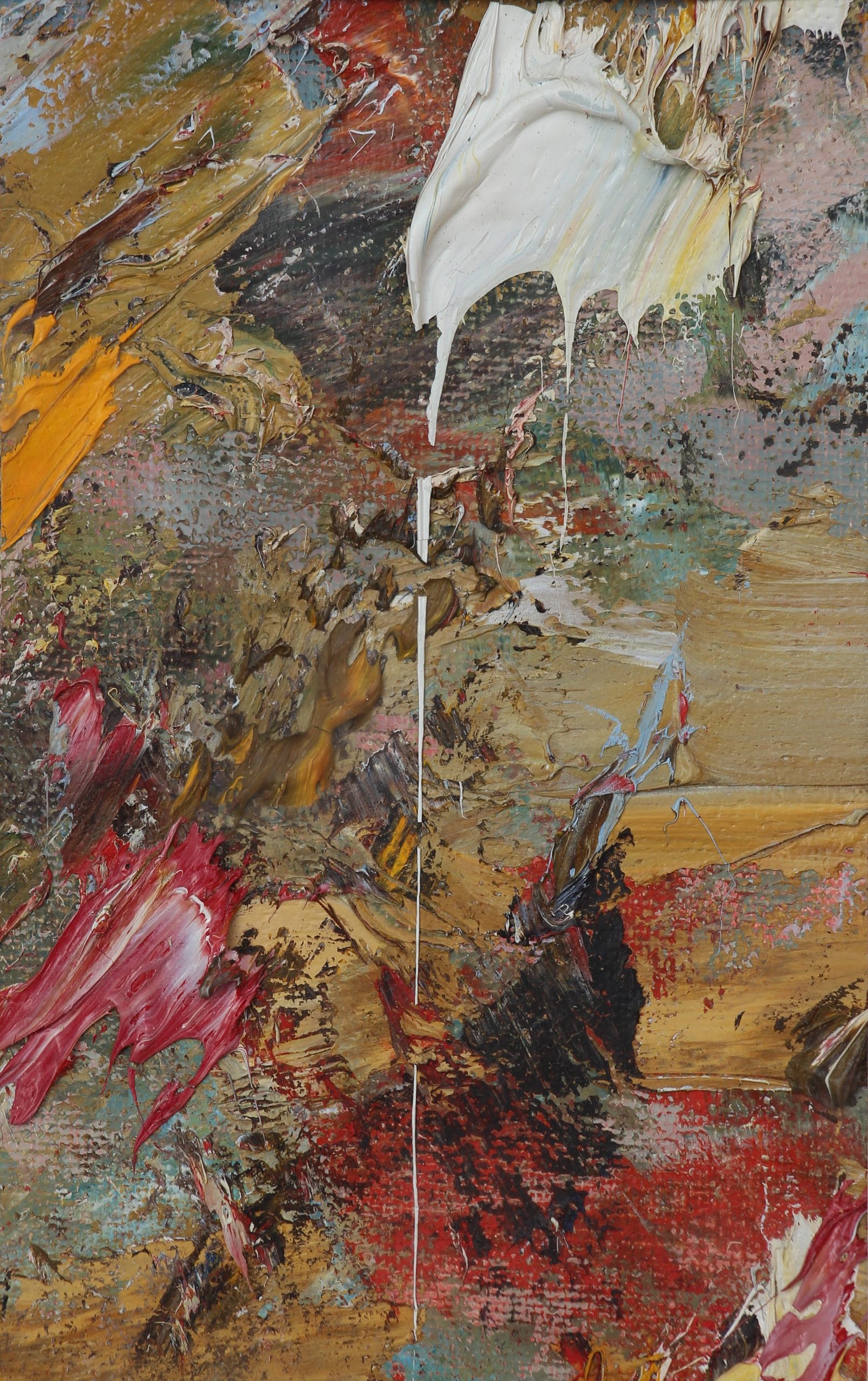
The Crucifixion as Seen Through the Eyes of Christ. 1980.
Nerja. Studio in Puerta del Mar, No.3. Oil on linen. 130 x 162 cm.
One night in 1980, a group of friends gathered in an old, abandoned power station beside the Río Chíllar, near Nerja, where a friend was staying. There was no electricity, so we sat together by candlelight and a fireplace.
On the mantelpiece stood an empty green Mateus rosé bottle. Candlelight passing through the glass projected flickering patterns of light and shadow onto the wall behind it.
As I watched, I suddenly saw what appeared to be the Crucifixion at Golgotha. But the perspective was extraordinary: I was not looking at Christ on the cross. I was seeing the scene through his own eyes.
The experience stayed with me, and I subsequently attempted to recreate that vision in a painting in my studio in Nerja.
Later, I divided the painting into 152 numbered fragments and sent them around the world, including to Pope John Paul II and the Metropolitan Museum of Art in New York.
A single vision had become 152 separate images, each carrying something of the original.
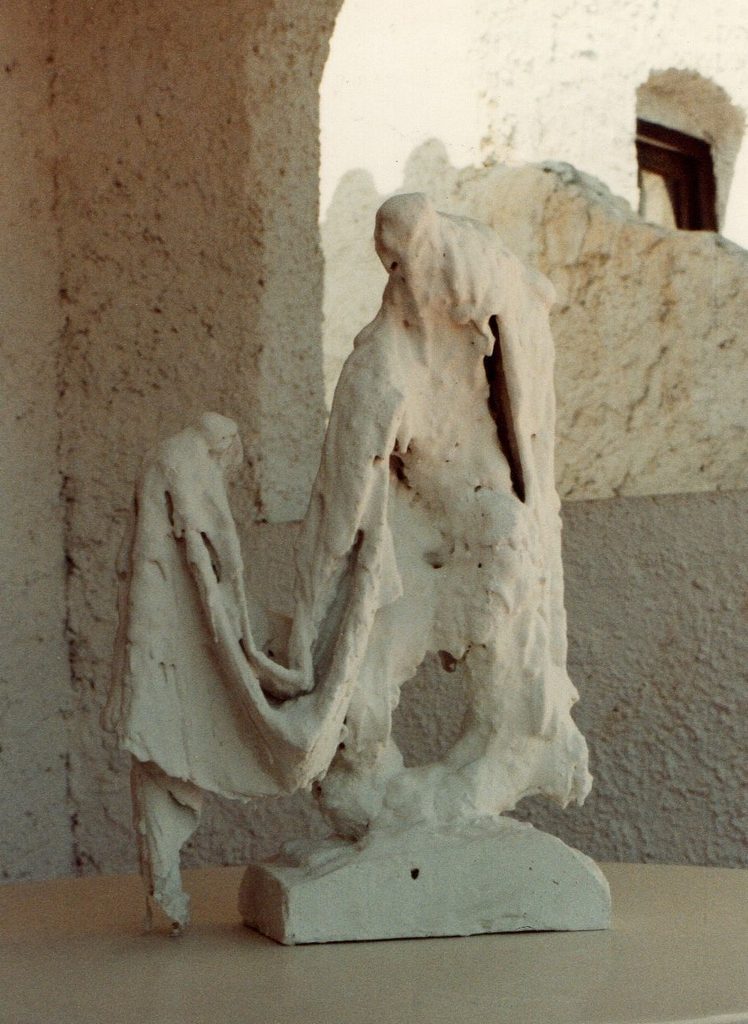
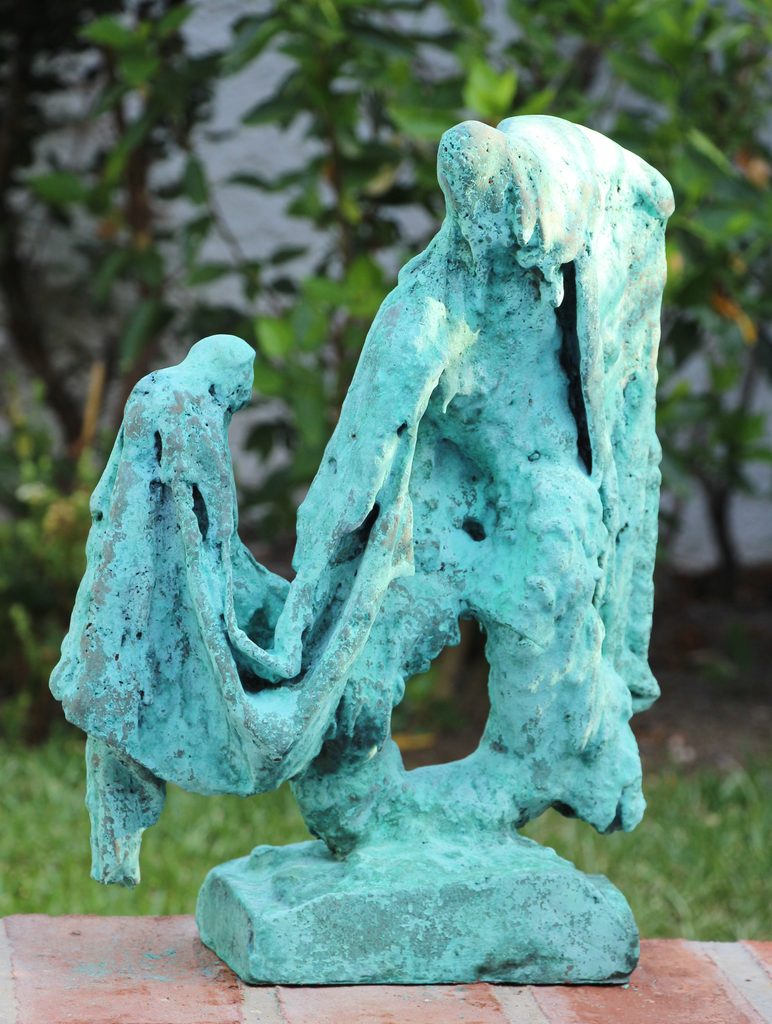
God and Man. 1981.
In my studio at Puerta del Mar, one section of the house was a wet space, which I converted into a small sculpture studio.
I began collecting roots of caña, the giant reeds growing in the surrounding area. Some had extraordinary shapes. I dipped them in plaster, added pieces of cloth and other materials, and allowed the forms I discovered to suggest what they might become.
It was a different way of working from painting. Rather than beginning with an image, I began with the materials themselves.
One of these sculptures, Dios y el Hombre (1981), was exhibited in Nerja in 1986 and, many years later, cast in bronze in Seville in 2017.
Looking back, these experiments marked the beginning of a relationship with materials that would become increasingly important in my work.
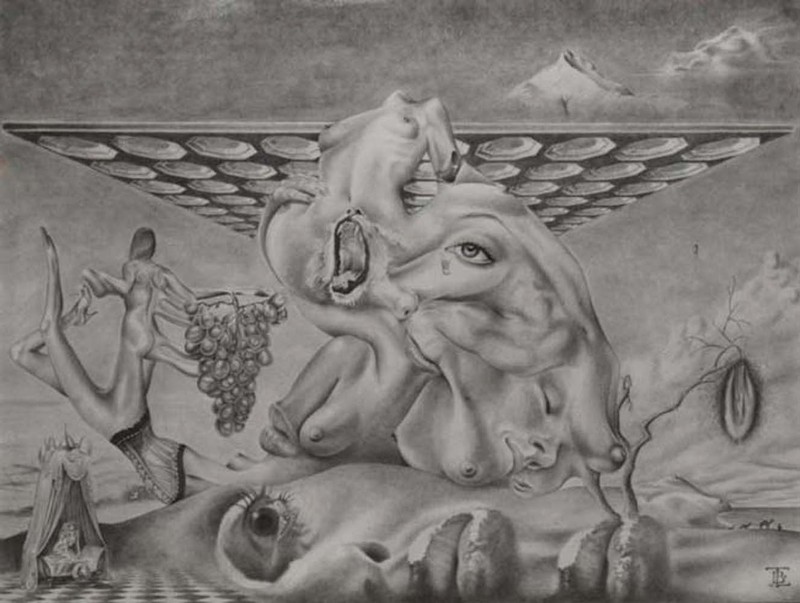
La Cuesta del Cielo. 1980-81.
Pencil drawing.
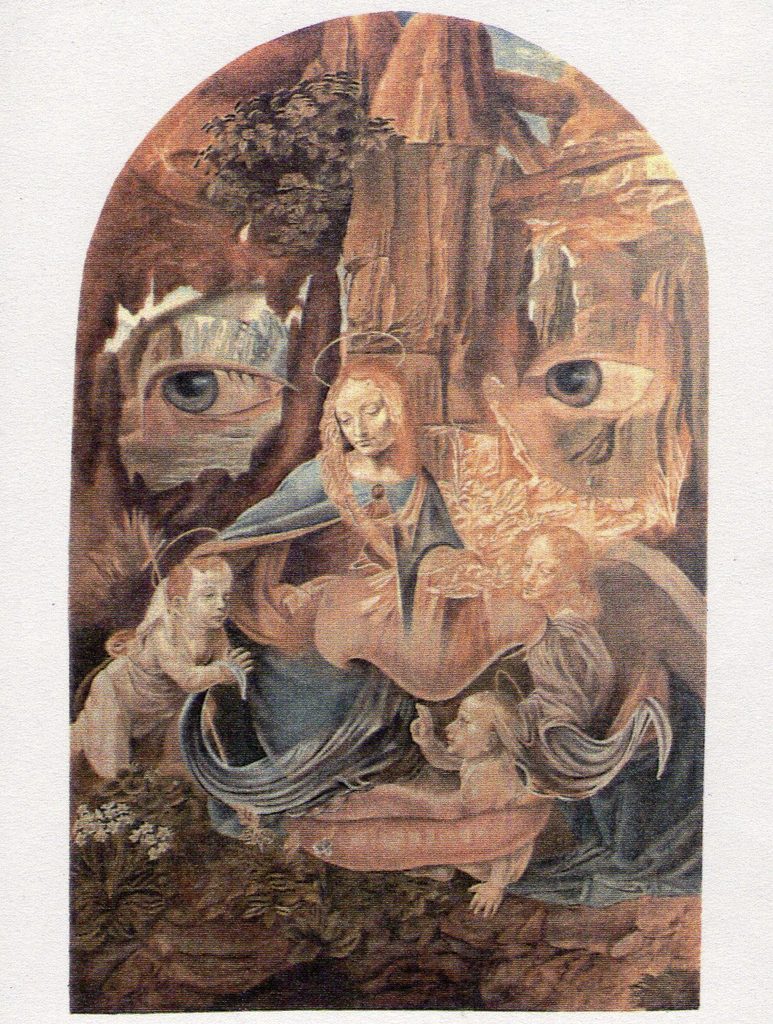
Dalí’s face as seen in Leonardo’s Virgin of the Rocks. 1981.
Unfinished.
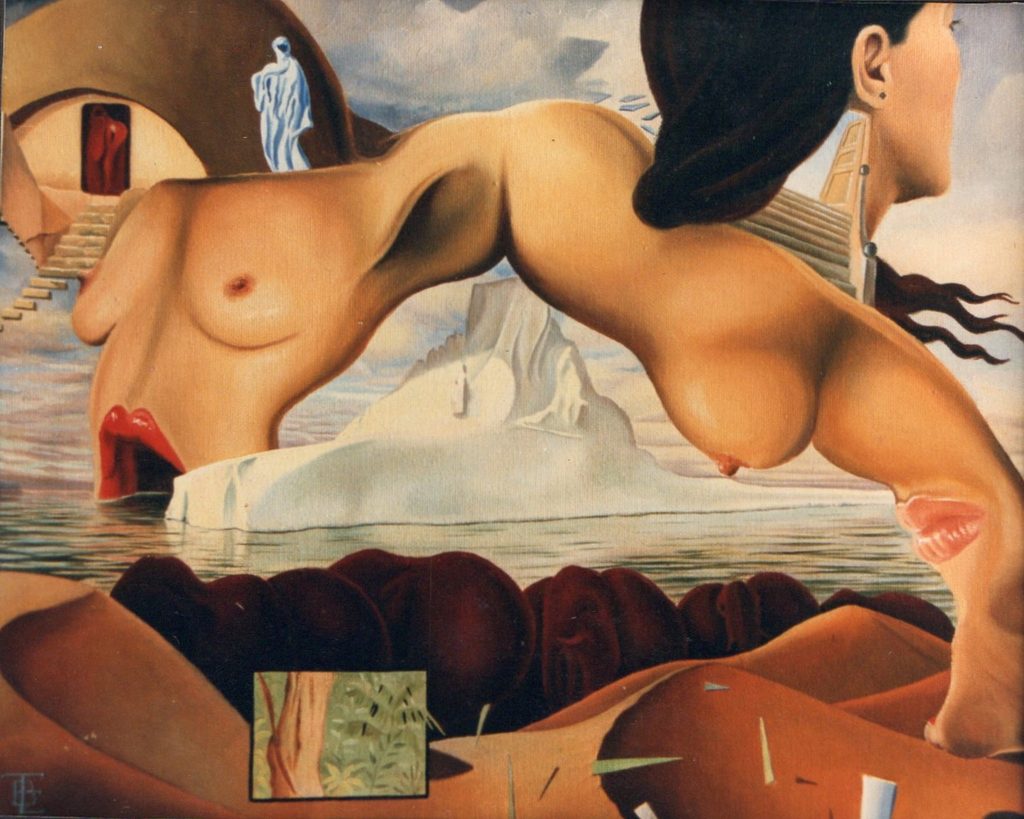
The Iceberg. 1982.
Oil on linen.
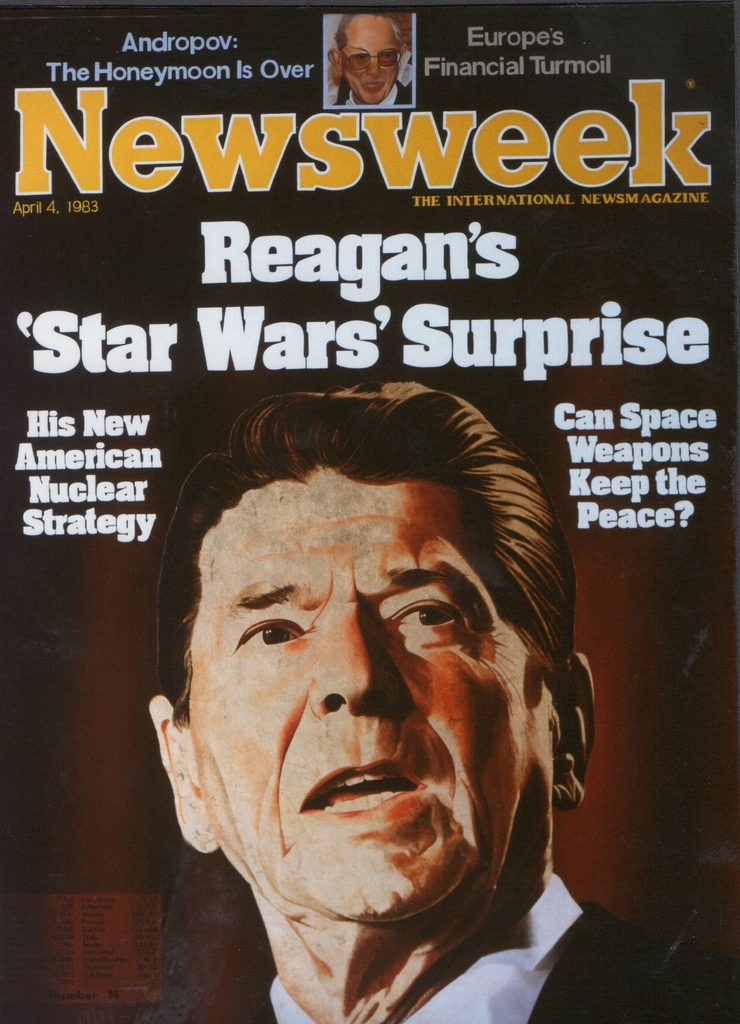
Reagan. 1983
Oil and gold leaf on linen, 193 × 144 cm. Puerta del Mar, Nerja.
In 1983, I reproduced the cover of the April 4 issue of Newsweek, featuring President Ronald Reagan and his newly announced Strategic Defence Initiative, popularly known as Star Wars.
I painted Reagan’s face in gold leaf, borrowing from the tradition of religious icons, in which gold signifies sanctity and divine authority.
By transforming a magazine cover into a monumental painting, I wanted to draw attention to the political implications of elevating a contemporary political leader to an almost sacred position, particularly in the context of nuclear confrontation.
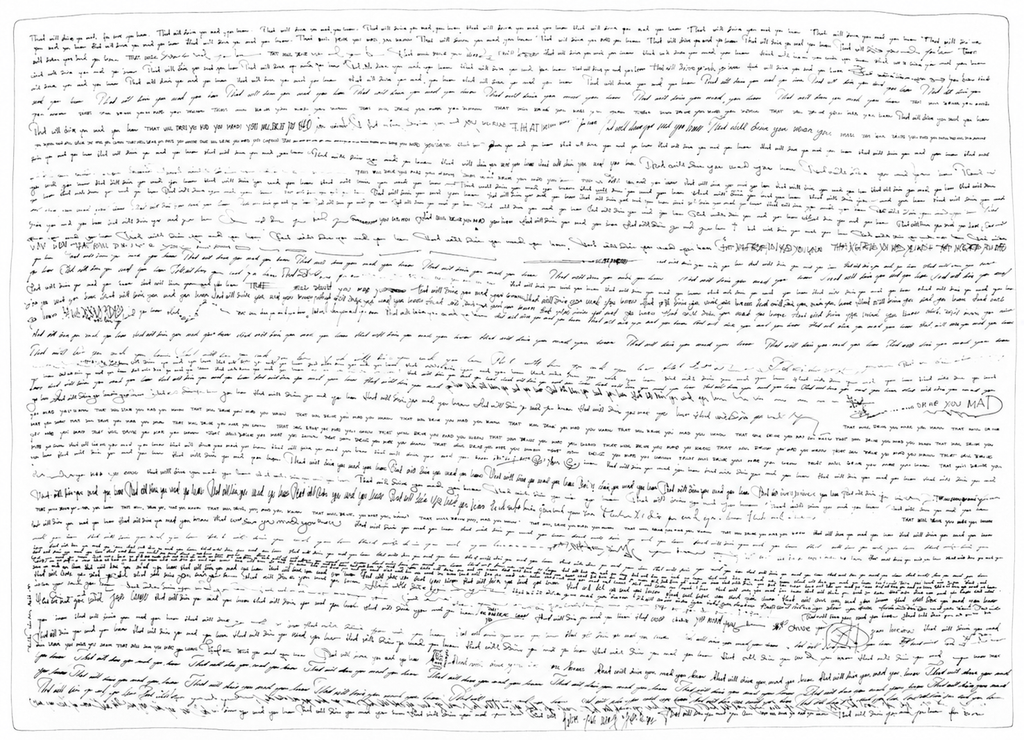
That Will Drive You Mad, You Know. 1982
Chinese ink on paper.
The sentence “That will drive you mad, you know” was written repeatedly, as many times as the paper would allow.
The idea was simple: when the mind becomes trapped in a thought it cannot escape, repeating itself endlessly without the possibility of advancing, that condition approaches a kind of madness.
The writing becomes both the expression of the thought and its imprisonment. The words continue, but nothing changes.
The work was exhibited in Nerja in 1982 and was subsequently destroyed.
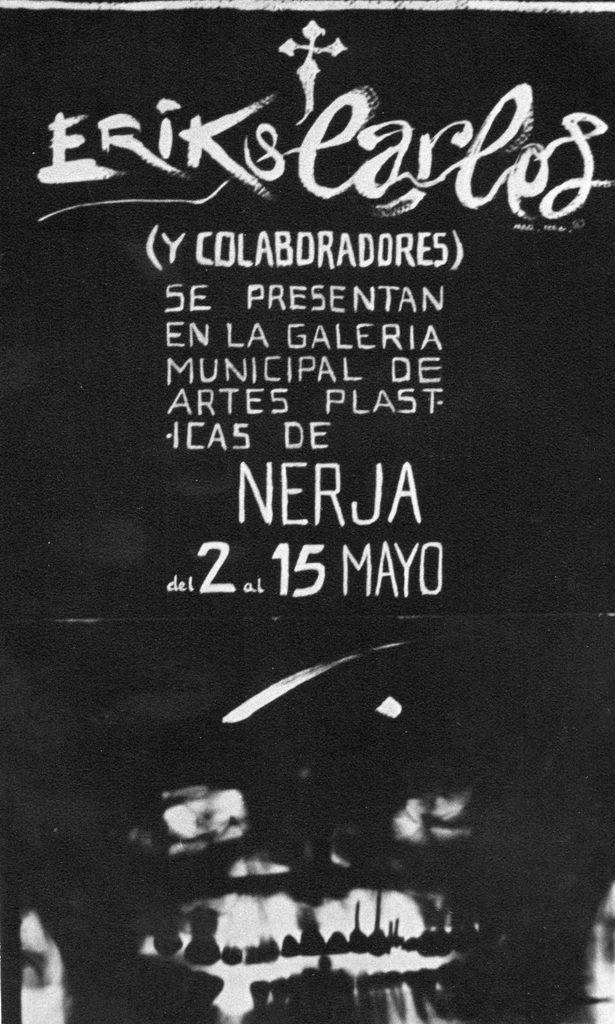
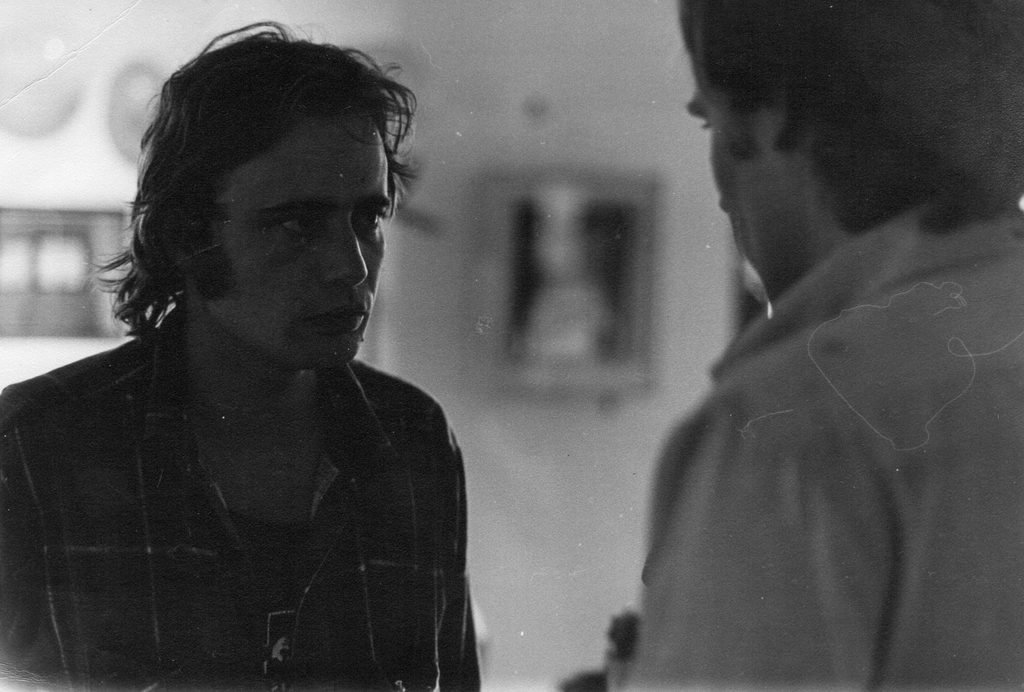
Erik Tönsberg and Carlos Álvarez, at the Galería Municipal de Artes Plásticas in Nerja, from 2 to 15 May 1982.
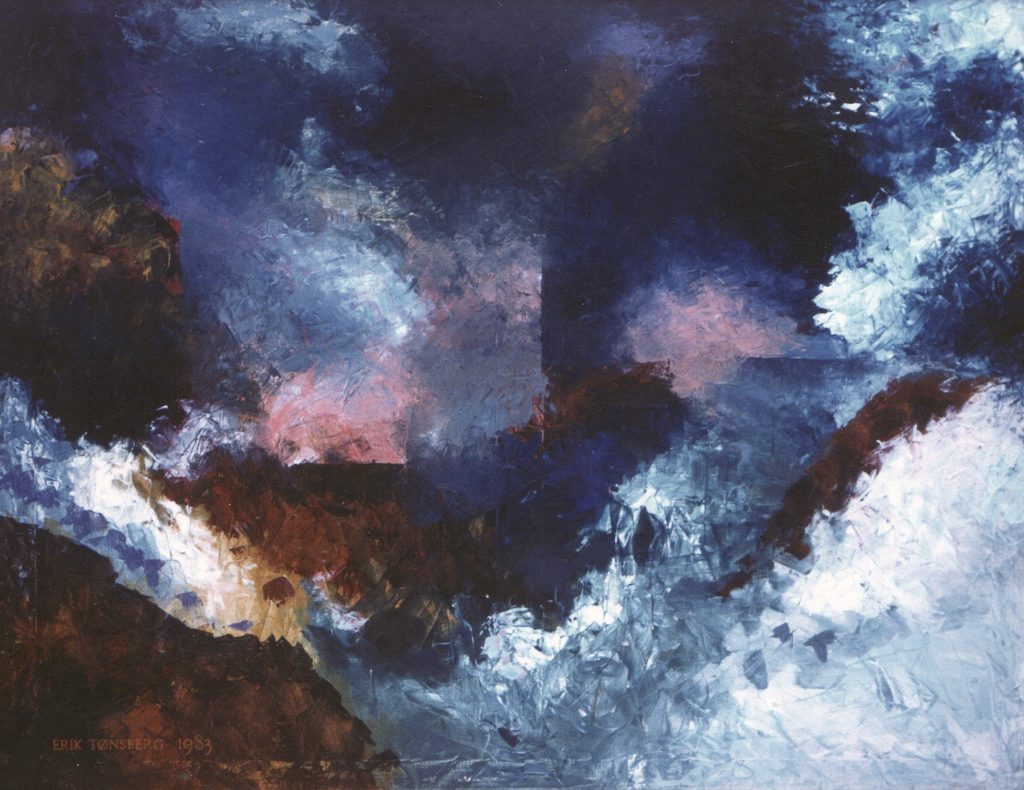
El Mar. 1983.
Oil on linen. Painted in the studio of Carlos Alvarez, Calle Pintada, Nerja.
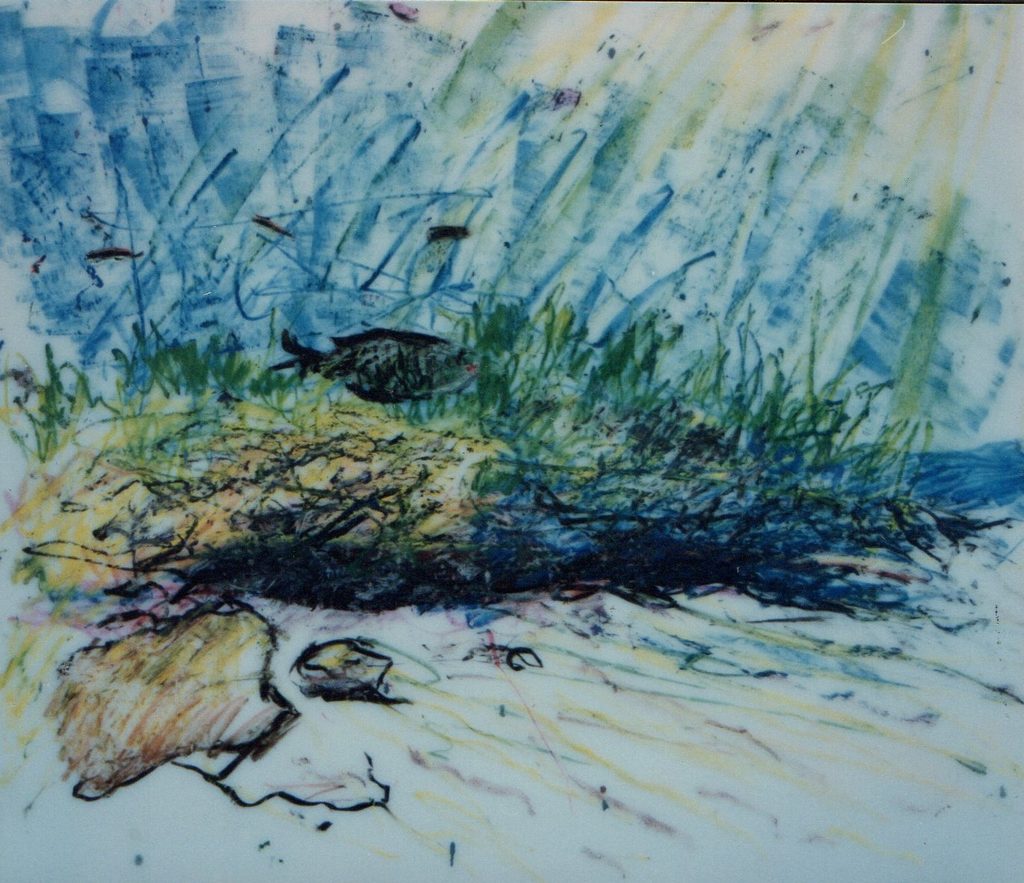
Underwater landscape. 1985
Wax crayons on Plexiglas.
In 1985, I went diving with Carlos de Miguel off Torrecilla Beach in Nerja, taking with me a sheet of Plexiglas and wax crayons.
Beneath the surface of the Mediterranean, I drew what I saw around me: the seabed, rocks, marine vegetation and fish.
Working underwater meant abandoning the familiar stability of the studio. The body floated, the water moved, and the drawing had to be made within those conditions.
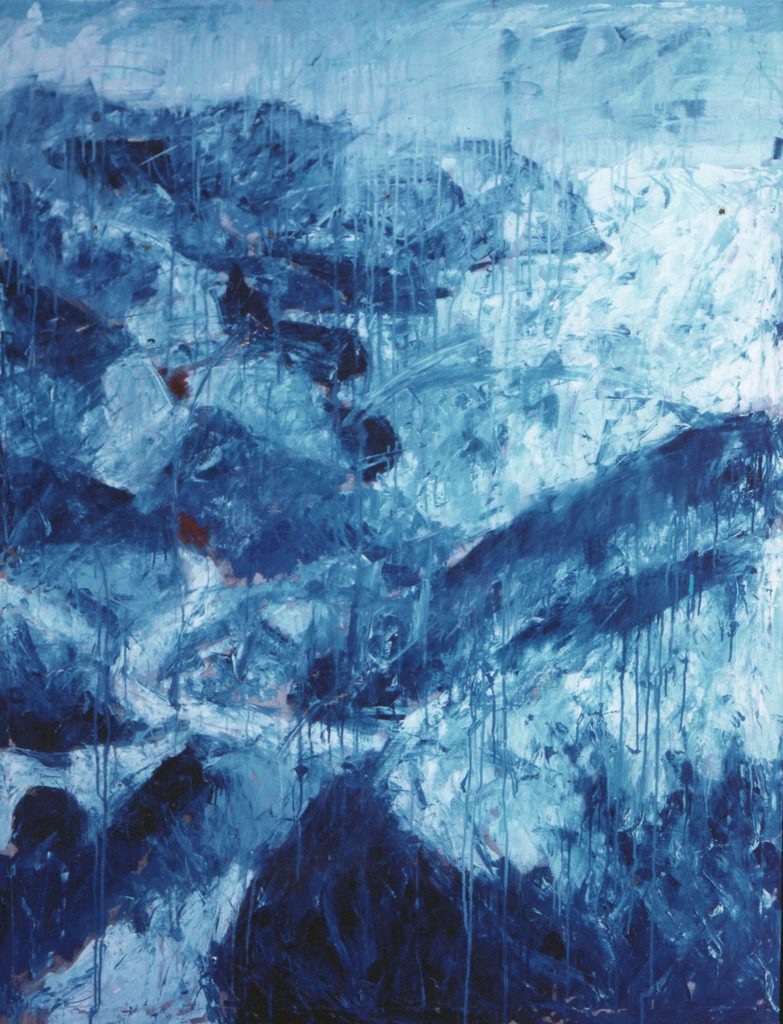
Cerro Gordo. 1985.
Oil on linen. 146×114 cm. Plaza Cavana, Nerja.
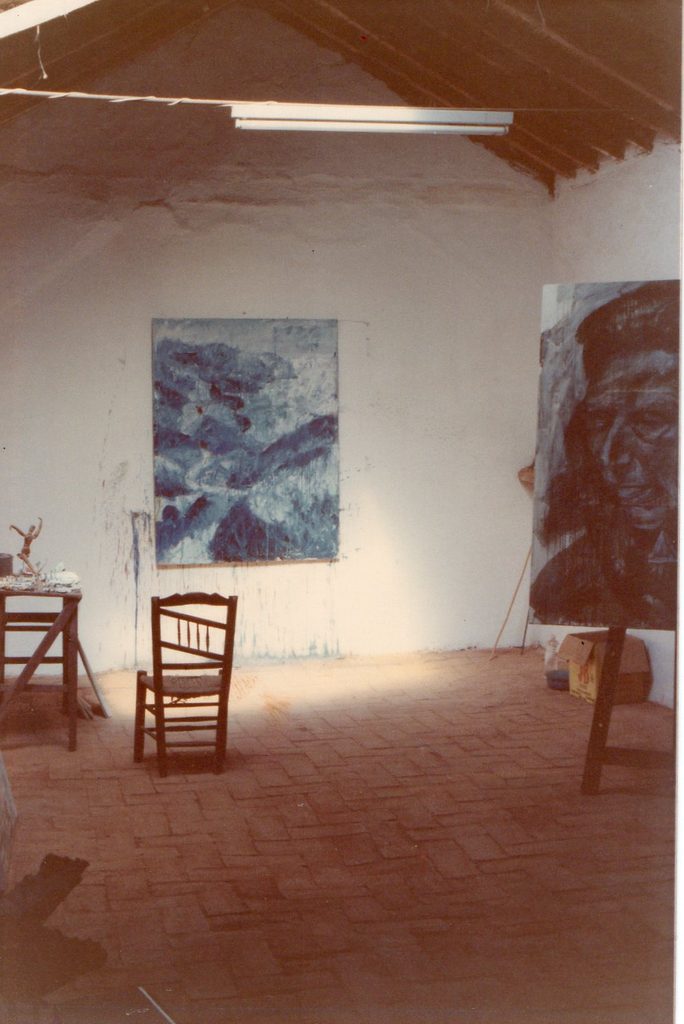
In 1985, I had a studio at Plaza Cavana, in the centre of Nerja. Emilio de Miguel put almost his entire house at my disposal as a studio, keeping only an office for himself on the ground floor.
The attic was a large, rather bare room with a tiled floor and an old wooden roof. Part of the roof had collapsed, leaving an opening through which daylight entered. What might have been considered a defect turned out to be a perfect skylight for painting.
On the far wall hangs Cerro Gordo, a painting inspired by the coastal landscape east of Nerja. To the right, partly visible, is a portrait of my friend Birgitta.
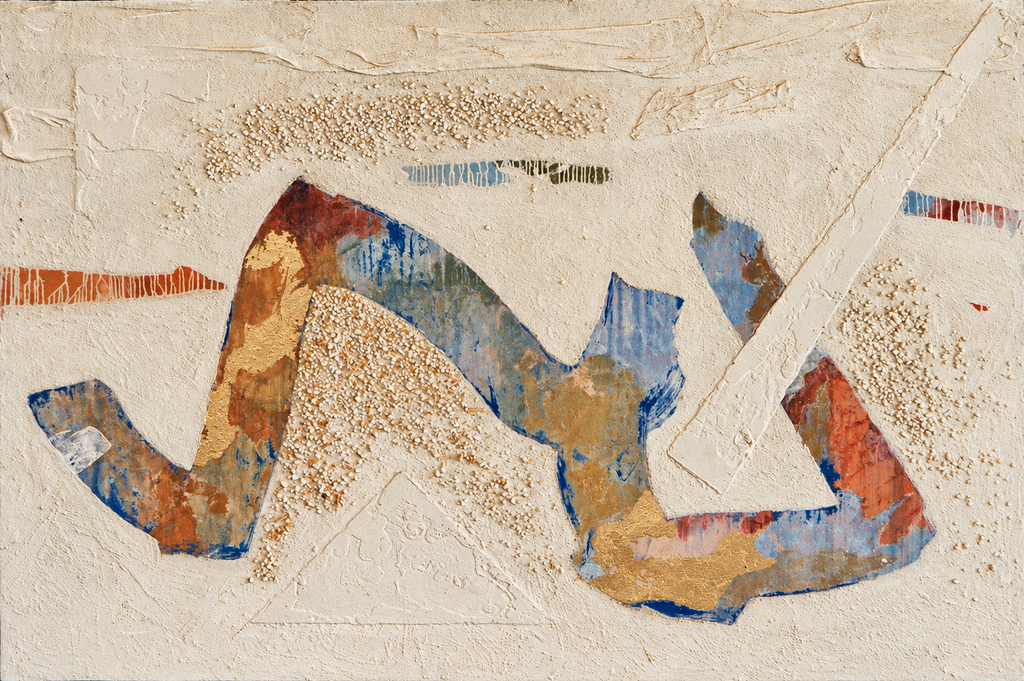
Traces of a Script. 1985
During this period, I continued experimenting with materials that could extend painting beyond its traditional surface.
The underlying colours of these works were inspired by Raphael, while the sweeping, calligraphic forms drew inspiration from Islamic script. Over the painted surface, I introduced plaster, plaster bandages, cloth, marble stones and gold leaf.
The combination created surfaces in which colour, texture and reflected light became part of the composition.
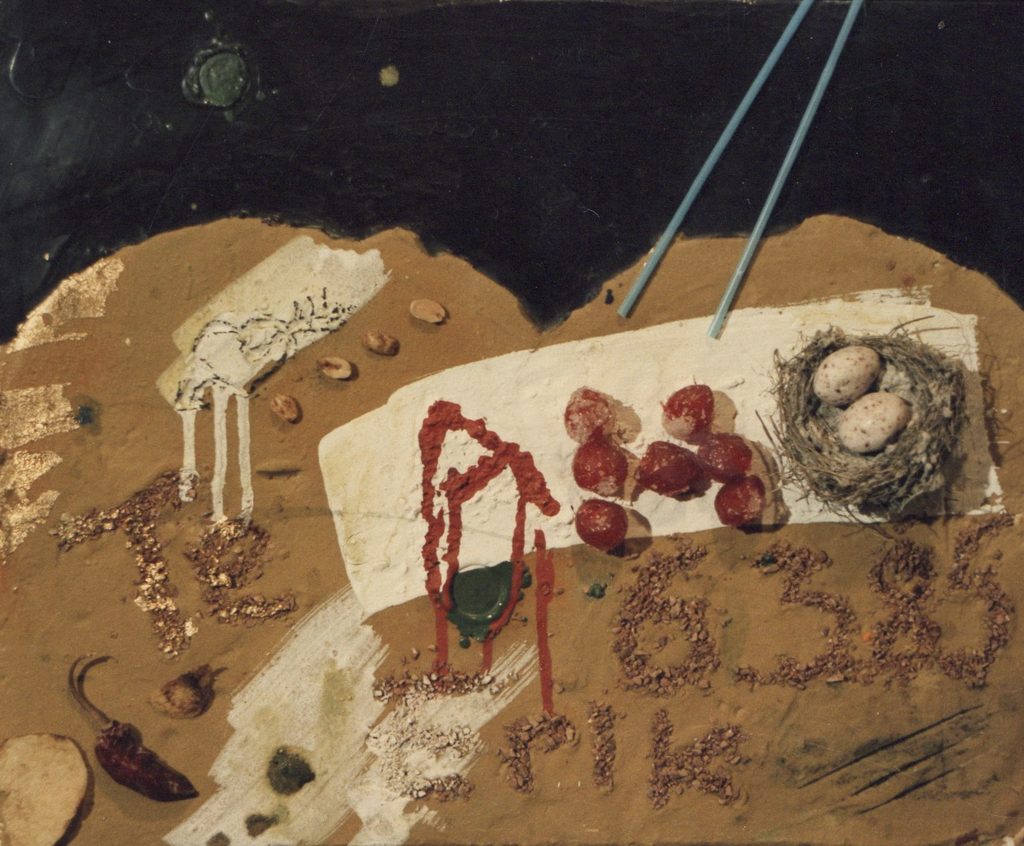
Te Amo. 1985.
Nerja. Gypsum, marble powder, nest with eggs, cherries, peanuts, almonds, pepper, chips, varnish, plastic straws.
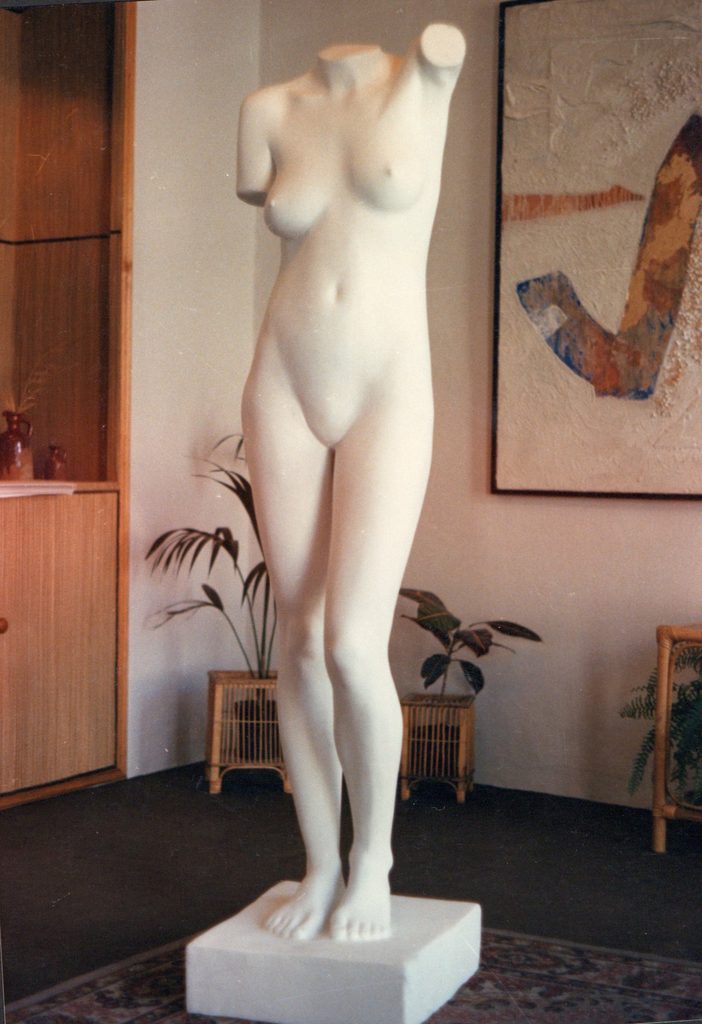
Susana. 1983-84.
The sculpture was made from several plaster moulds taken directly from Susana’s body. These captured the contours of her torso and legs and were used to construct the final sculpture in fibreglass reinforced with polyester resin. We initially began making a mould of her face, but decided against including the head, hair and arms. Apart from the technical difficulties involved, these elements would have distracted from the essential form of her body.
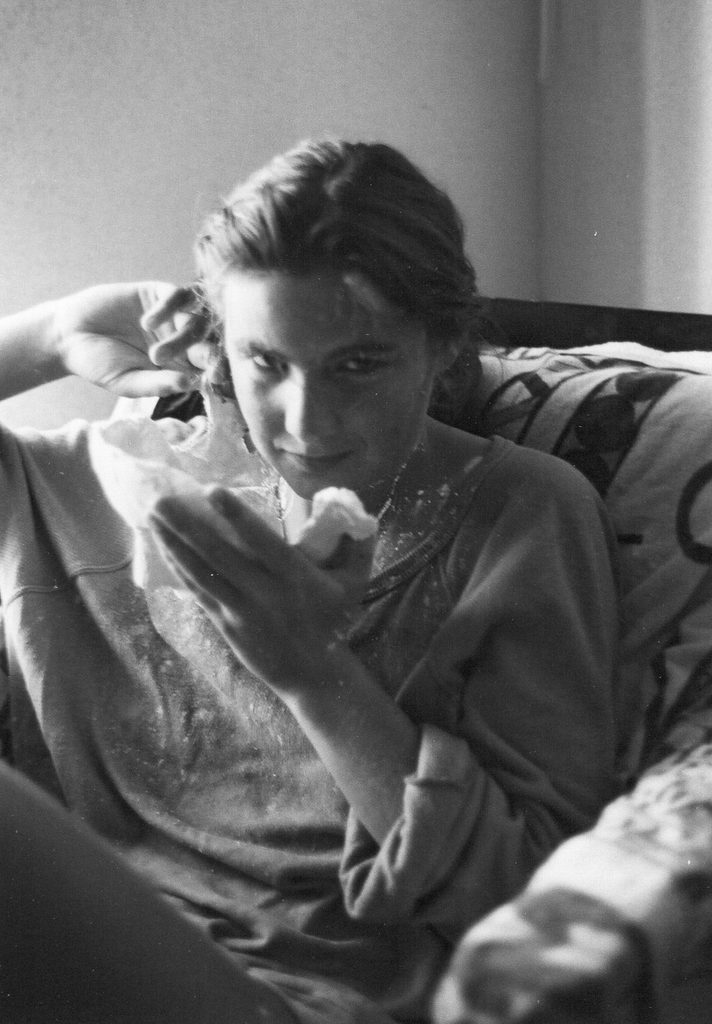
1984. Susana.
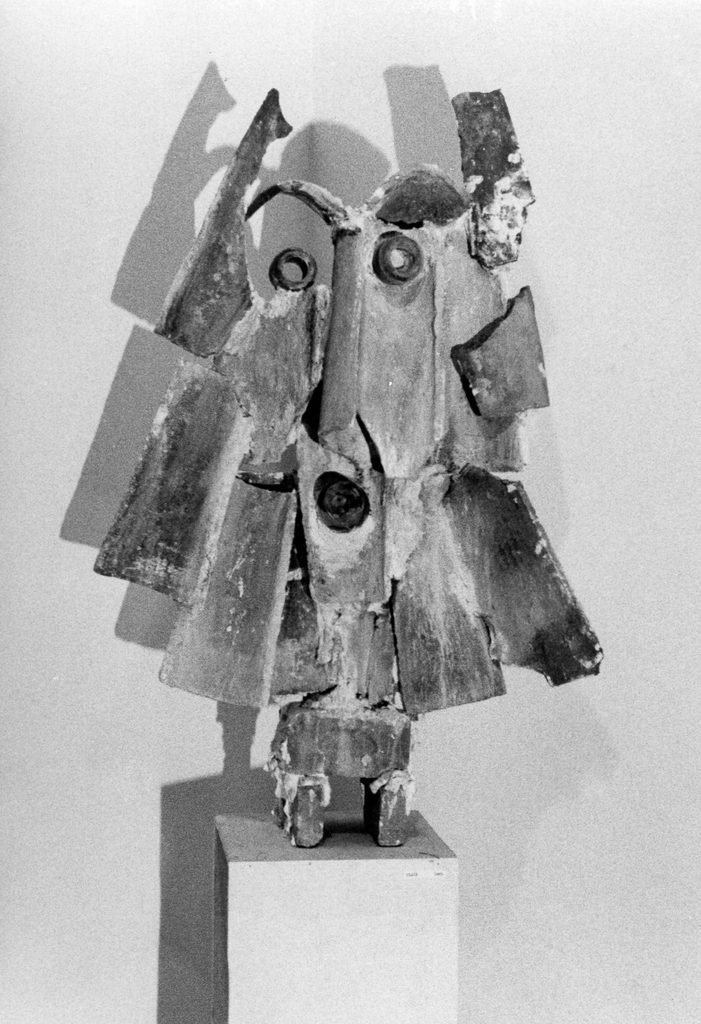
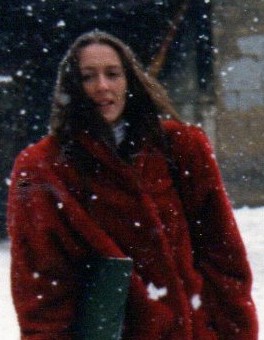
Clair Nano. 1984
Nerja. Studio at Plaza Cavana.
Roof tiles, terracotta bricks, plaster, wood and wire. 122 × 84 × 40 cm.
A sculptural portrait of my friend Clair Nano, assembled from ordinary building materials.
Despite the roughness of the materials, the result bore a surprising resemblance to its subject.
Clair herself was not particularly flattered.
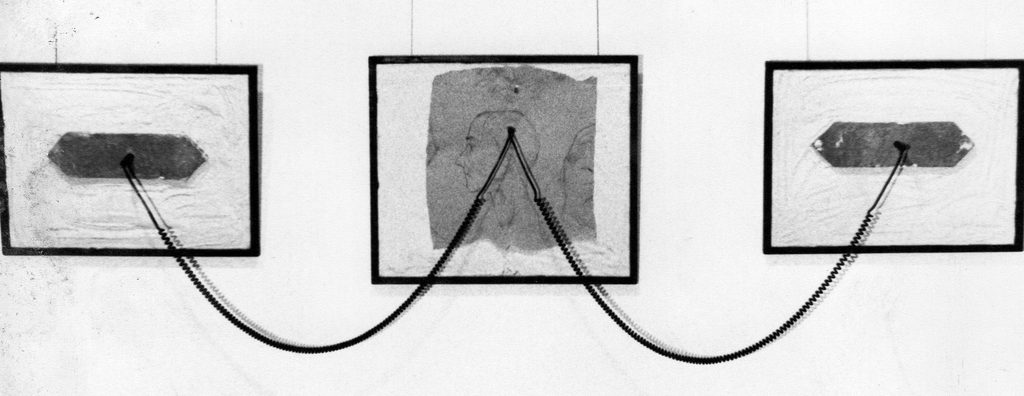
Delia. 1985
Nerja. Mixed media: drawing on wrapping paper, handmade clay bricks, loudspeaker cables, marble powder, plaster and wood.
A portrait of Delia built around three elements: earth, mind and communication.
At the centre, an informal drawing on wrapping paper represents the mind. On either side, handmade clay bricks represent the earth, while loudspeaker cables connect the three panels, introducing communication as the third element.
The contrast between the casual drawing, the weight of the bricks and the sweeping curves of the cables transforms a simple portrait into an exploration of the relationship between mind and matter.
Exhibited at the Ayuntamiento de Nerja. Subsequently destroyed.
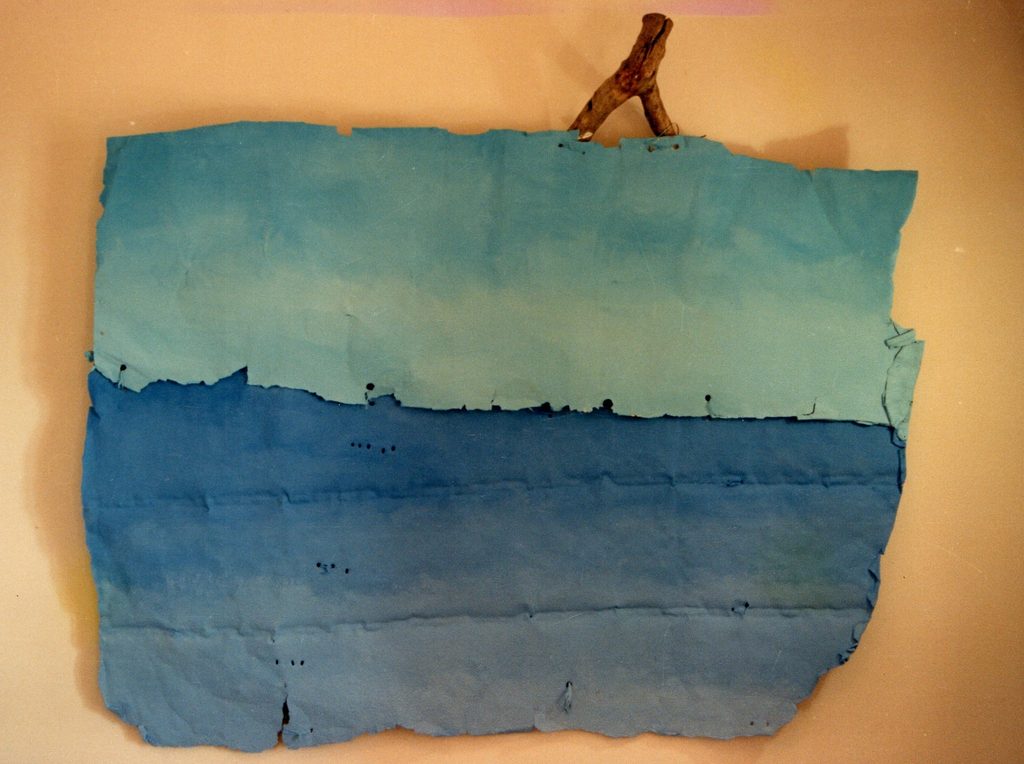
Sky and Sea. 1986.
Nerja. Wood, sheet metal and acrylic paint.
While walking in the mountains above Nerja, near Cuesta del Cielo, I came across a small house where someone kept goats and made goat’s cheese.
There I found an old gate that had been used to keep the goats inside their enclosure. I carried it on my back all the way down the mountain to my house in Nerja, a considerable distance.
I painted it in shades of blue, transforming the weathered gate into an evocation of sky and sea.
For several years, it hung on the wall of our home.
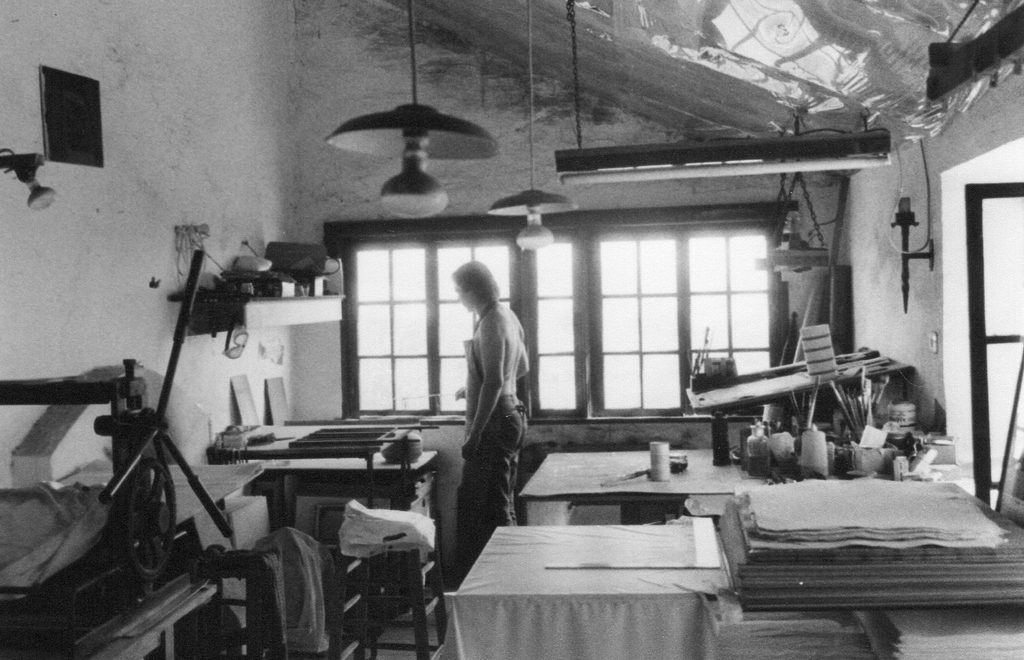
Etching Studio of Perry Oliver. 1986.
Working on etchings in the studio of Perry Oliver, Calle Almirante Ferrándiz (known locally as Calle Cristo), Nerja.
The studio was equipped with a traditional printing press and provided the opportunity to explore etching and other intaglio techniques.
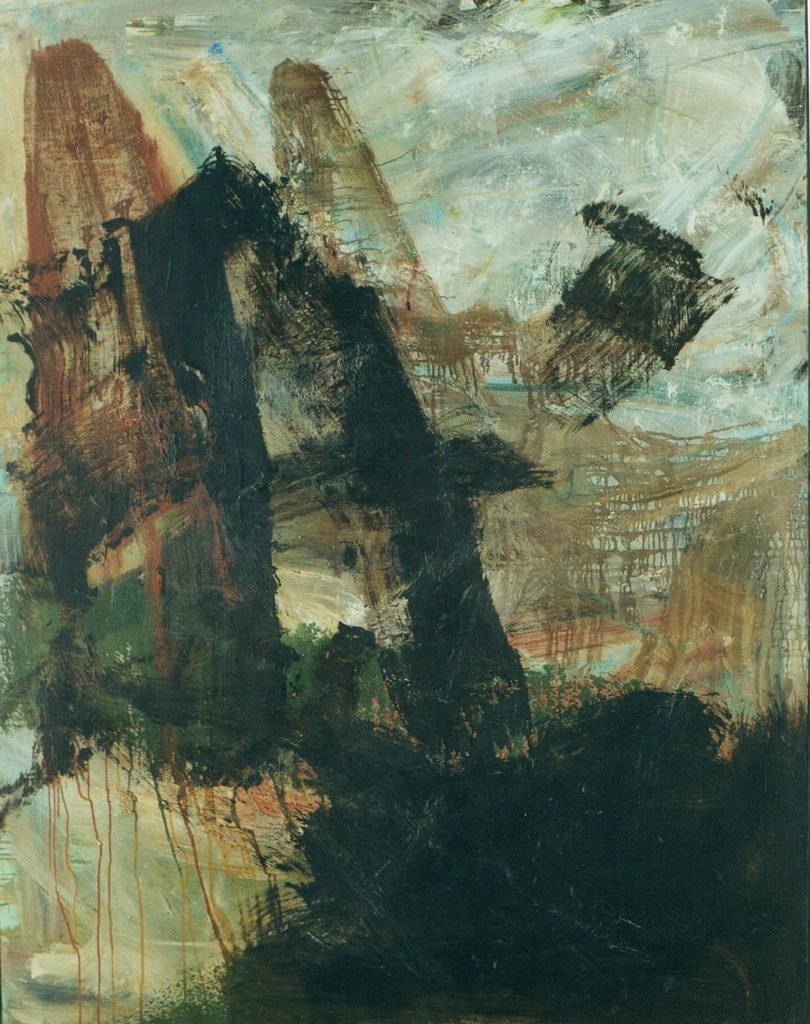
Tierra de Nadie. 1987.
Nerja. Oil on linen. 146 x 114 cm.
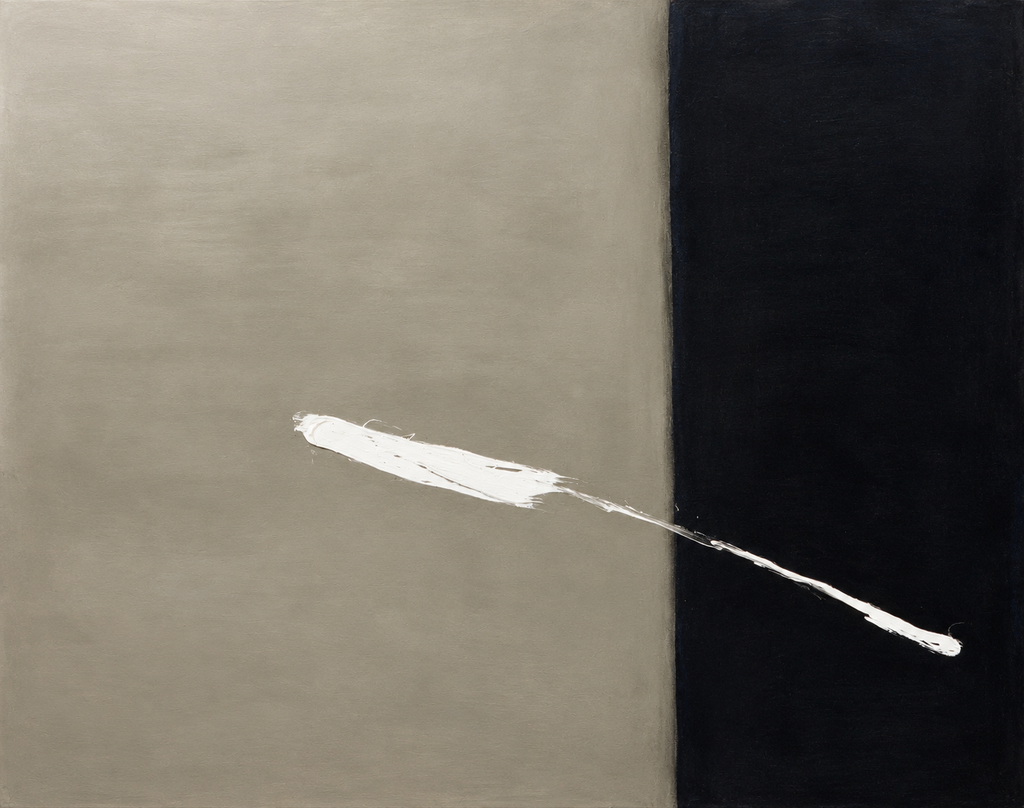
El Paso. 1987.
Nerja. Oil on linen. 146 x 114 cm.
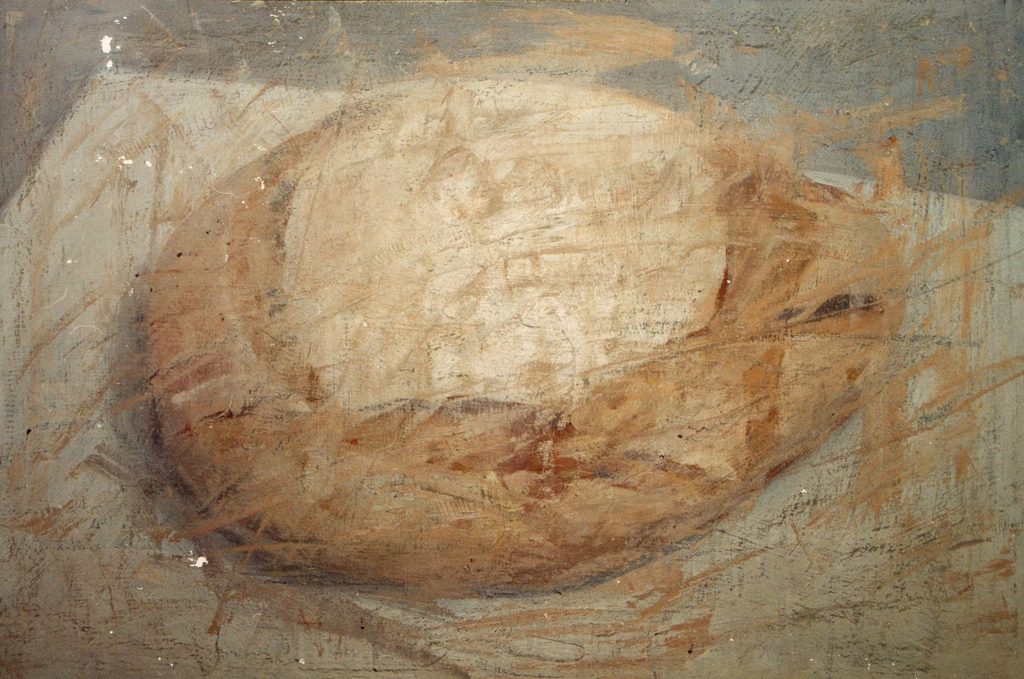
Pan de Guadix. 1989.
Seville. Bread from Guadix. Oil on laminated board. The original painting that led to the “Pan de Guadix” series of works in different materials.
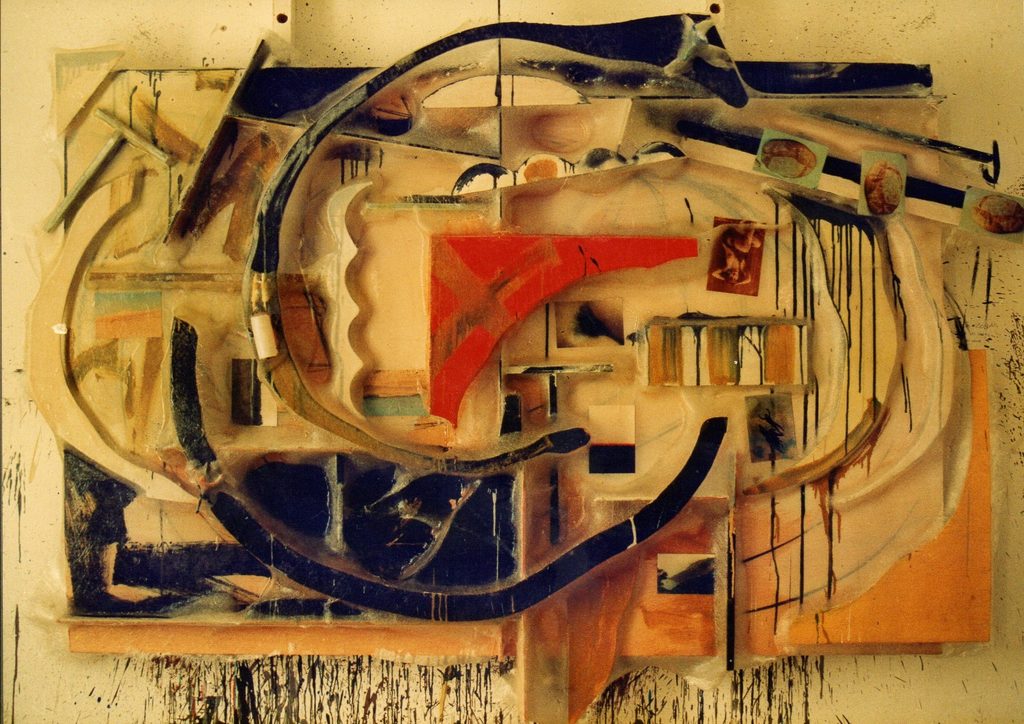
Analytical bread. 1989.
Seville. Pan de Guadix series. Wood, glass fibre, polyester resin, photographs.
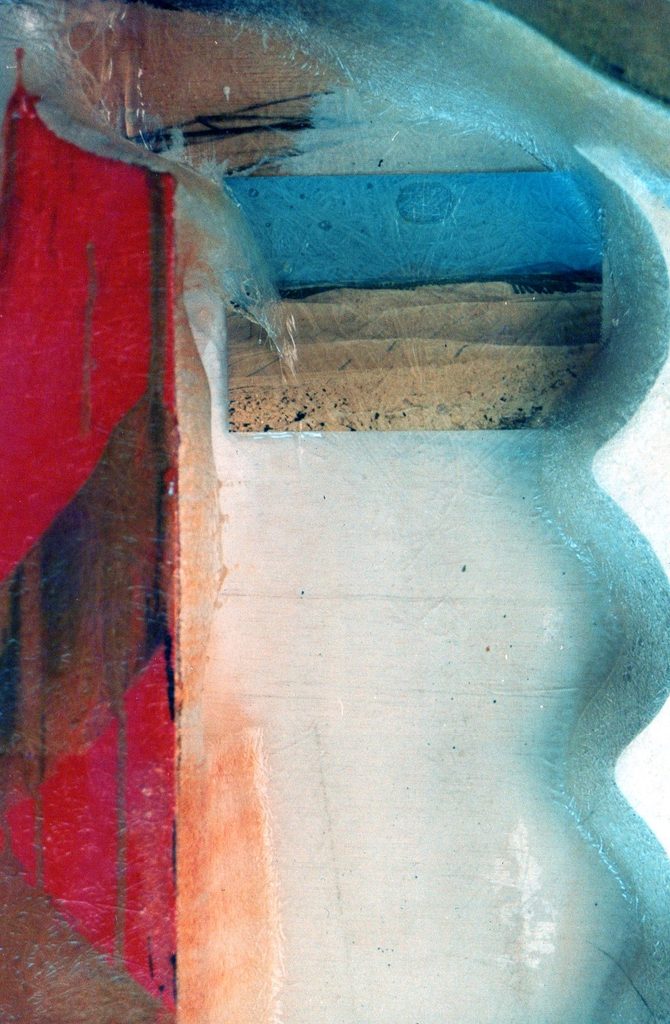
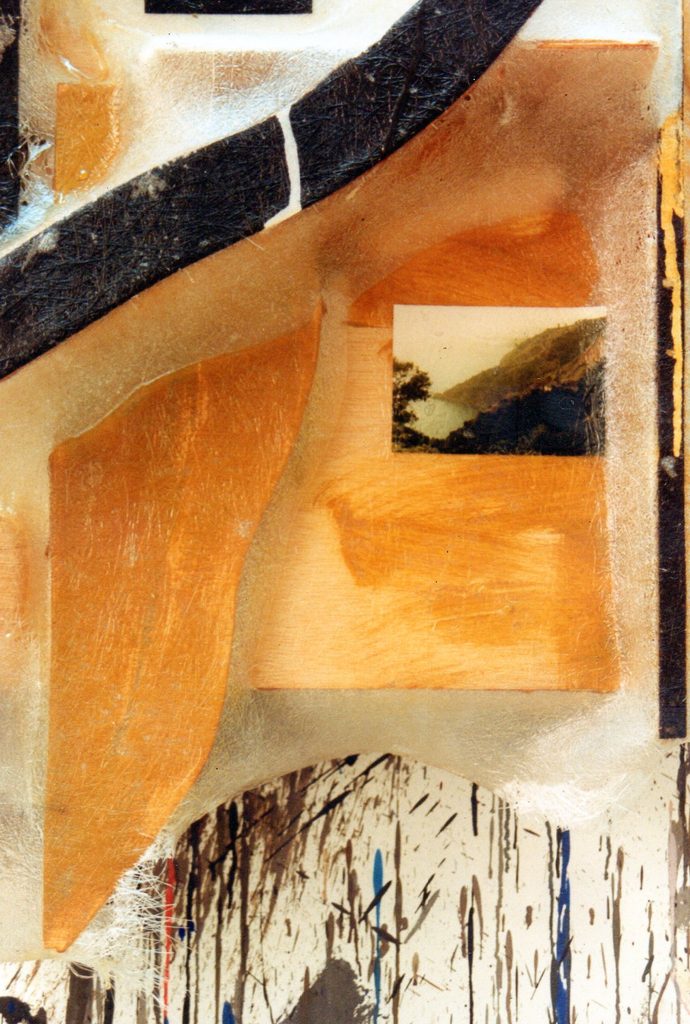
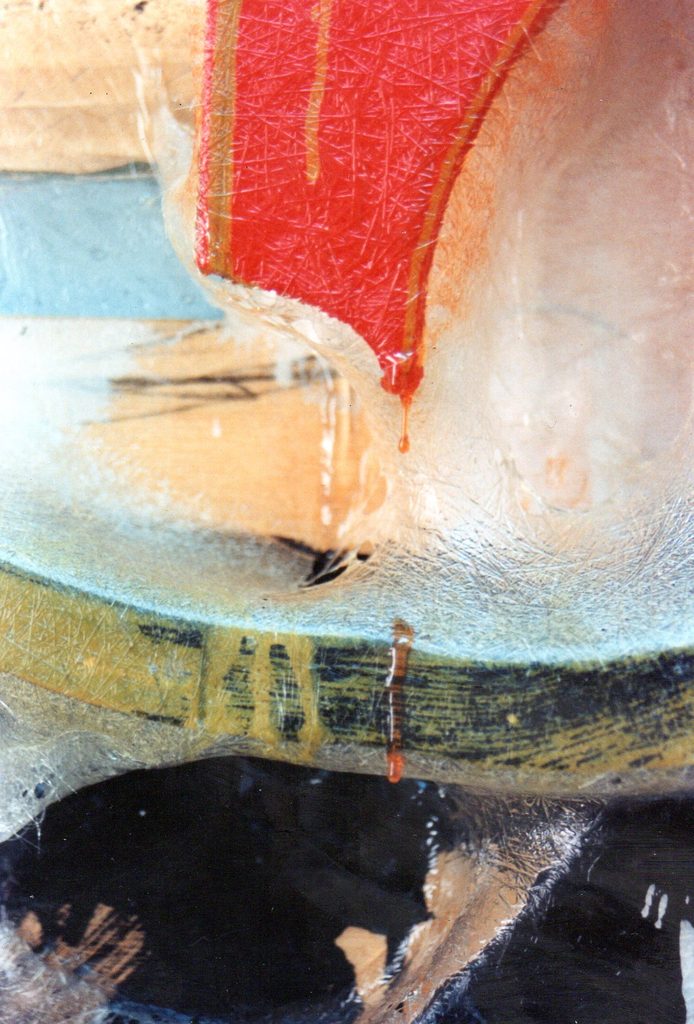
Details.
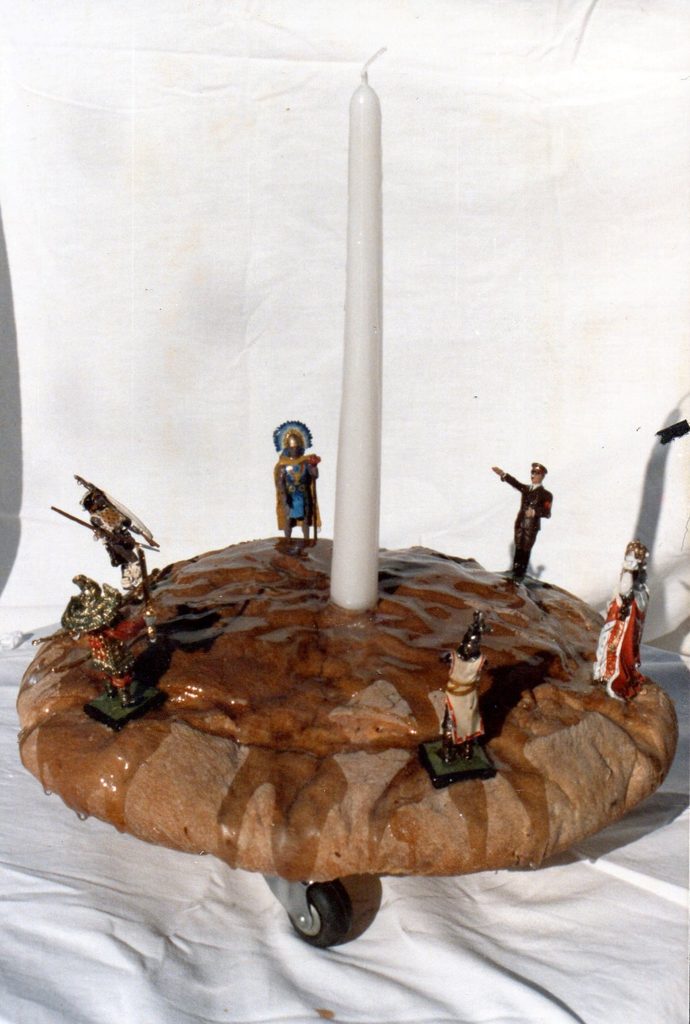
Movable Bread. 1989
Seville. Pan de Guadix series. Bread, lead figures, candle, resin and rubber wheels. 40 × 30 × 30 cm.
A loaf of bread from Guadix becomes the stage for a small assembly of figures representing military, political and religious authority.
At its centre stands a white candle, symbolising the higher principles invoked to justify power: divine will, moral truth or national destiny.
Yet the candle is made of wax. It can burn down and disappear.
The entire construction rests on wheels, introducing an element of absurdity into this miniature theatre of power.
What appears permanent may prove surprisingly fragile.
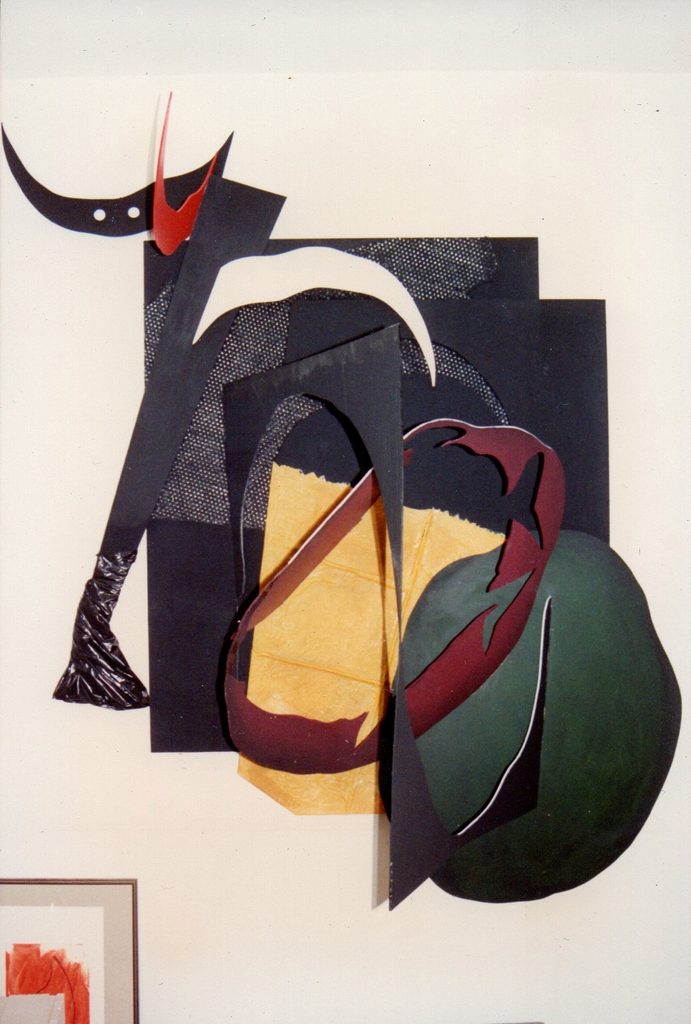
Pan Toro. 1989.
Seville. Pan de Guadix series. Bull bread. Wood, plastic, cloth, glass fibre, polyester resin. 230 x 200 x 90 cm.
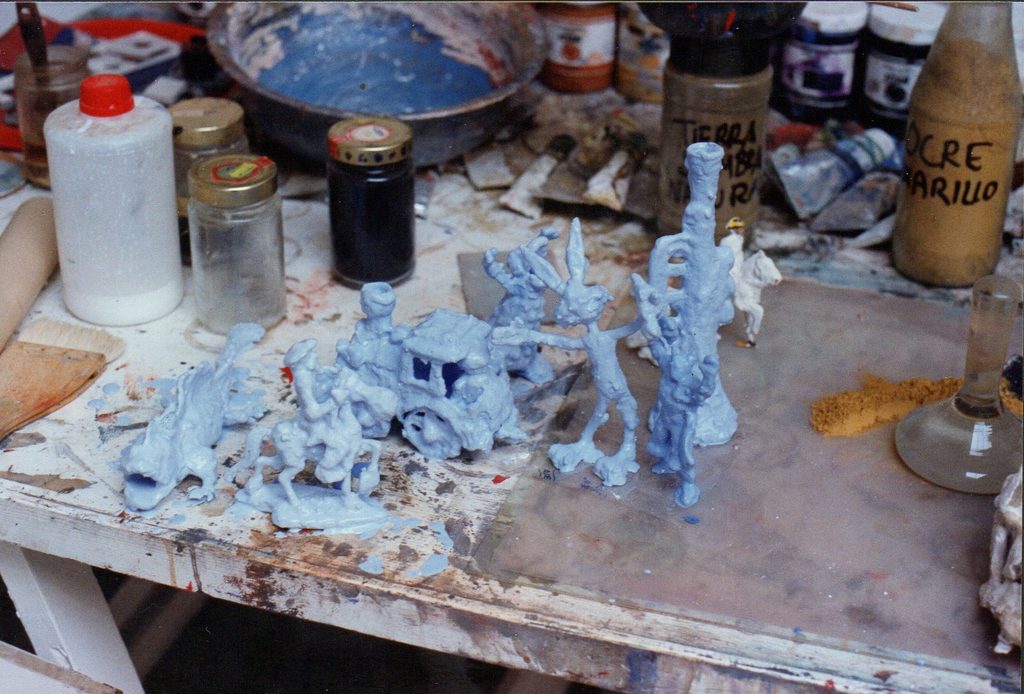
1989. Seville studio at Fernan Sanchez de Tovar. Working on Iconographic DNA bread.
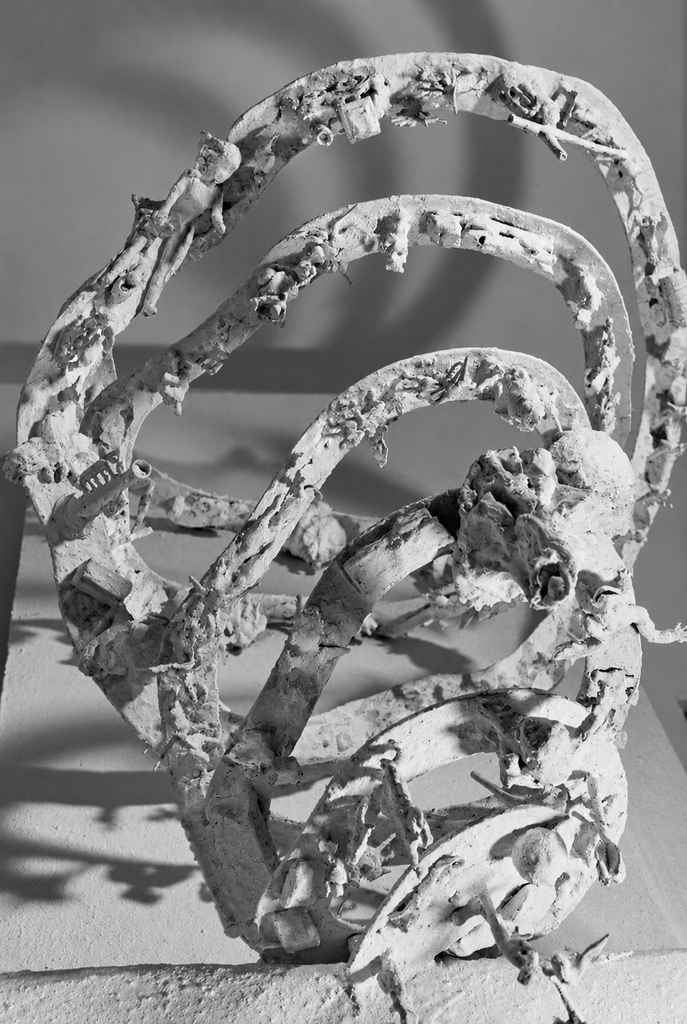
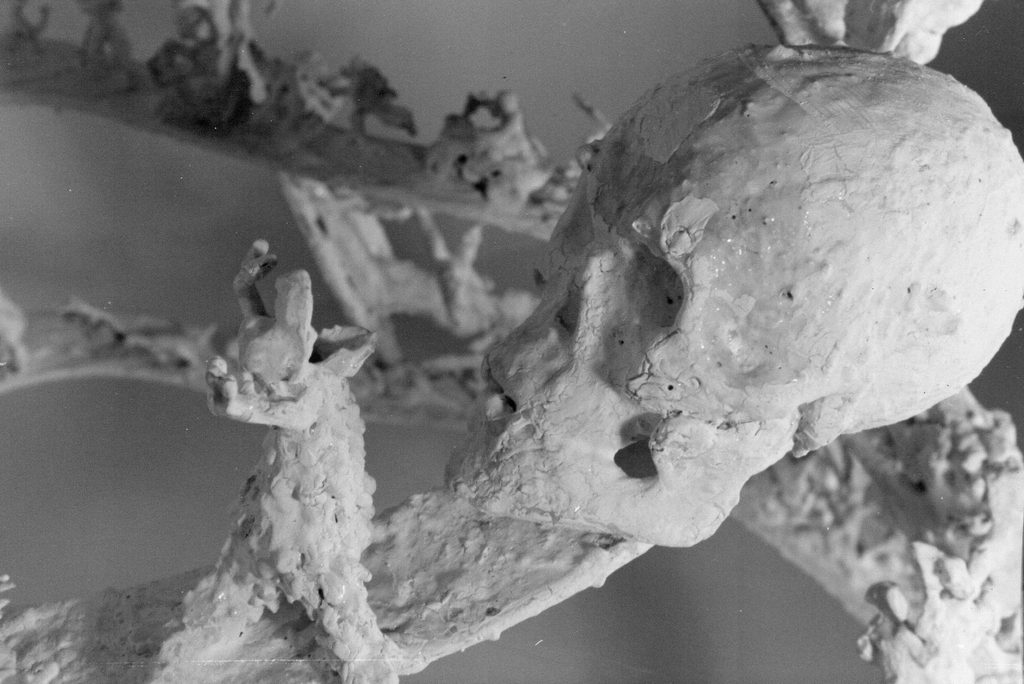
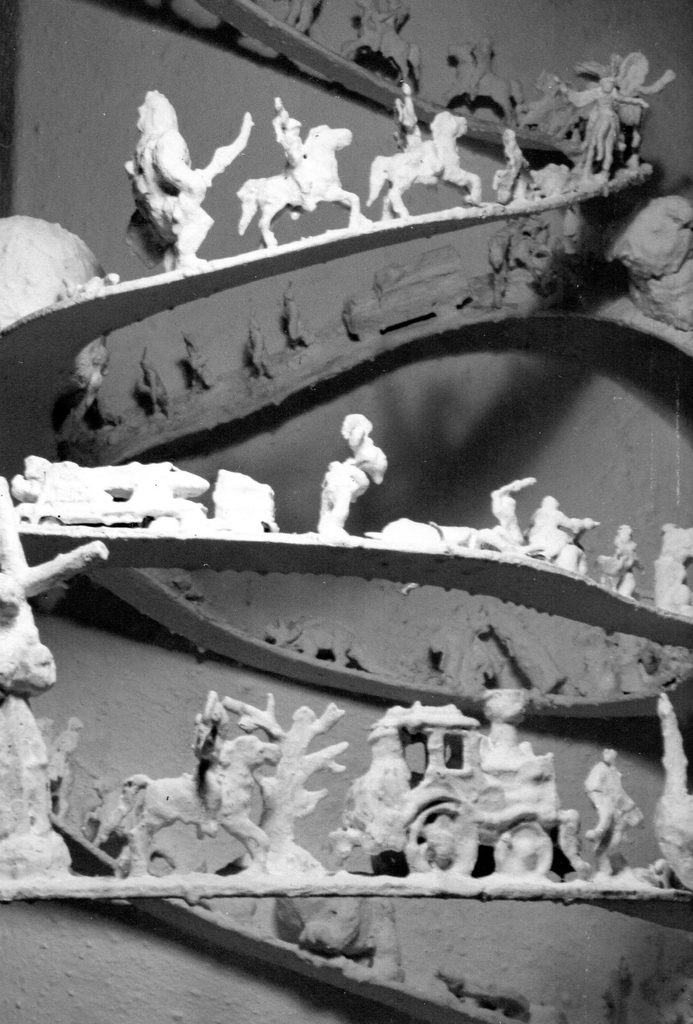
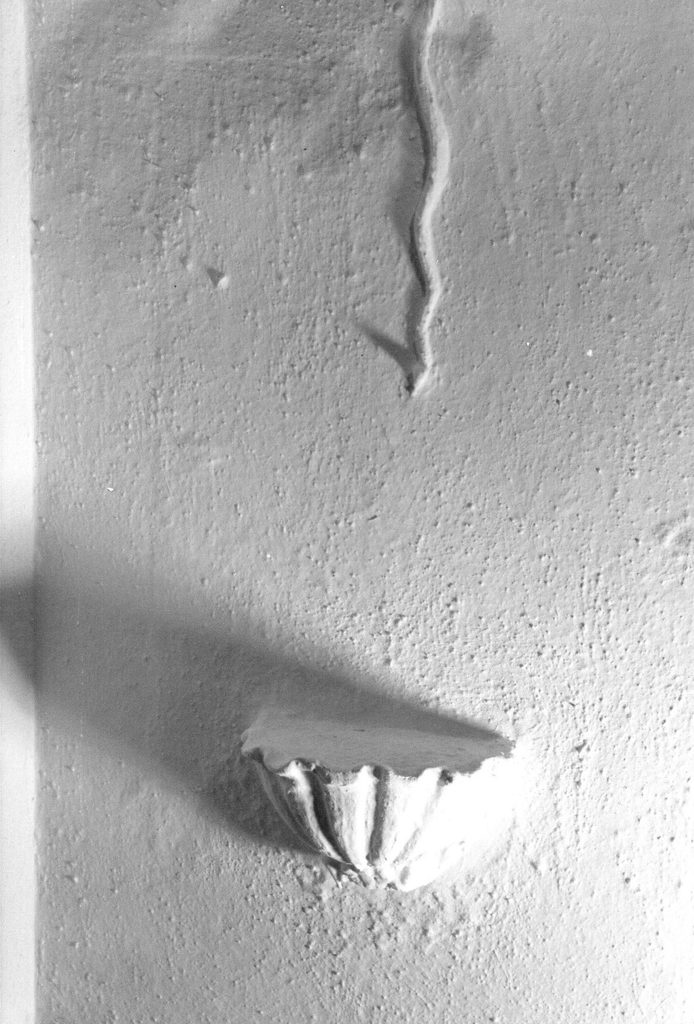
Iconographic DNA. (Foldable Bread). 1989
Seville. Pan de Guadix series.Wood, plastic toys, polyester resin, marble powder and paint.
Iconographic DNA represents the journey of life, from youth to death.
A plywood sheet was cut into the shape of a loaf of bread and extended into a spiral. Small plastic figures, animals and objects were attached along its length, dipped in polyester resin mixed with marble powder, and painted white.
The figures evoke successive stages of human existence: childhood, encounters, struggles, desires and the inevitable passage towards death. Among them appear the snake and the source, suggesting the recurring relationship between life’s origins and its end.
The spiral gives this journey a physical form, advancing through space while continually turning back upon itself. Life appears not as a straight progression, but as an accumulation of experiences.
Because of the complexity of its materials, the sculpture was a fixed construction. Yet the spiral, emerging from a box-like structure, suggested the possibility of folding the entire work back into its point of origin.
An entire life, with its accumulated experiences, images and memories, might thus be imagined as folding back upon itself.
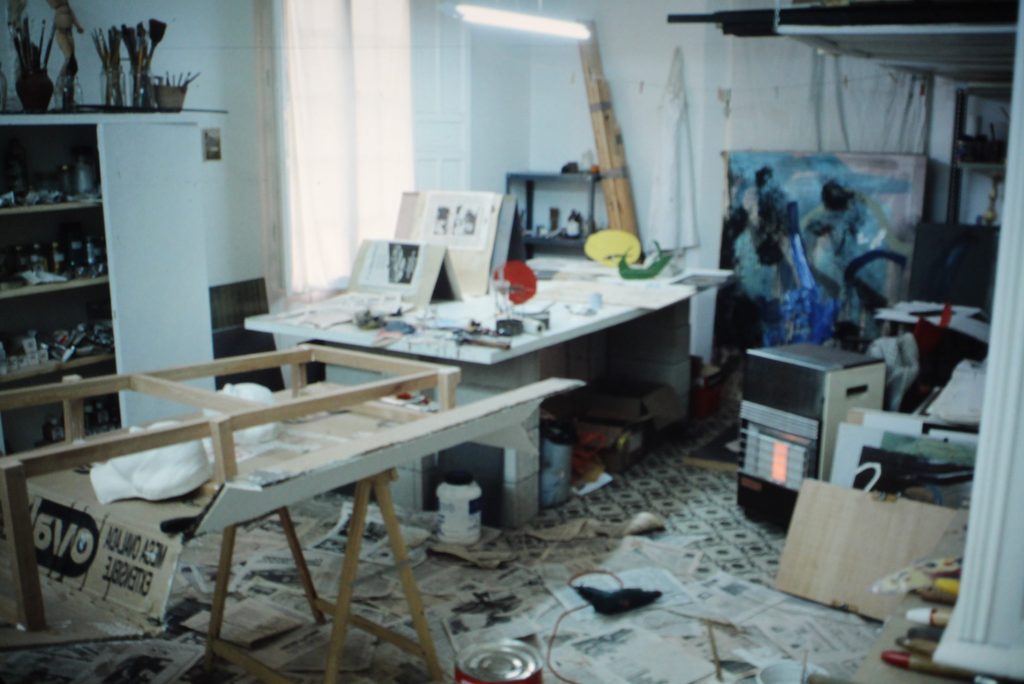
The Seville Studio, 1987
The studio in Seville was originally divided by a wall, which I demolished to create a larger working space. I carried the bricks out by hand, bit by bit, disposing of them in nearby containers. The result was a spacious studio where I could work simultaneously on paintings, sculptures and other projects. In the background of the photograph stands Tierra de Nadie (1987).
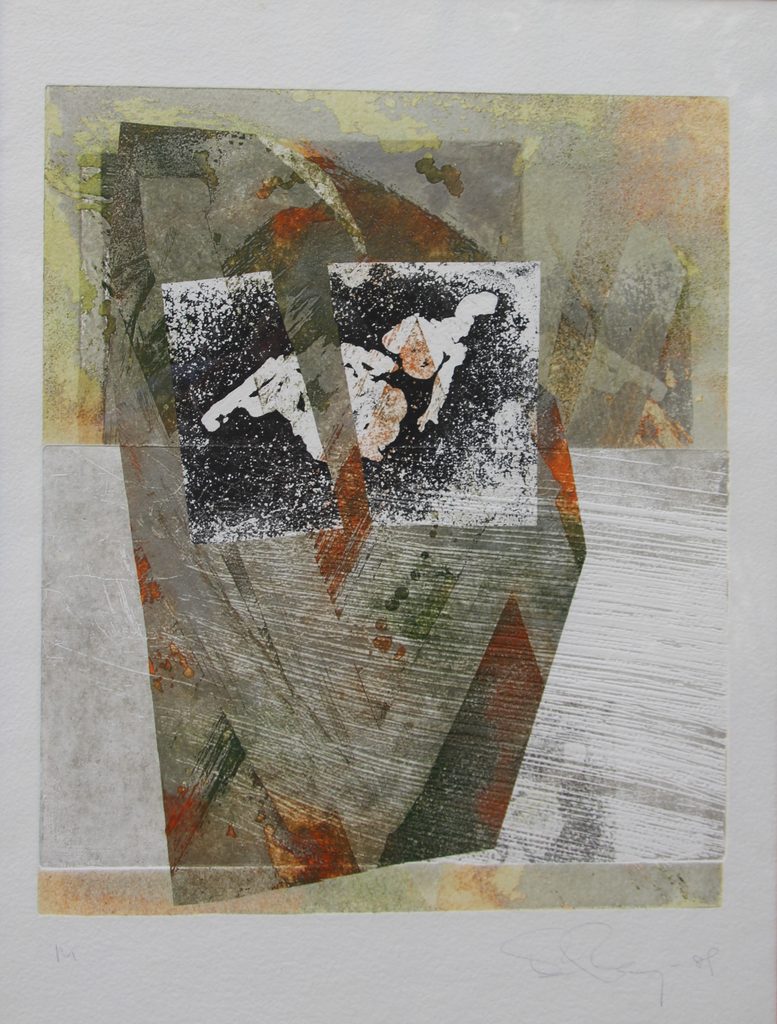
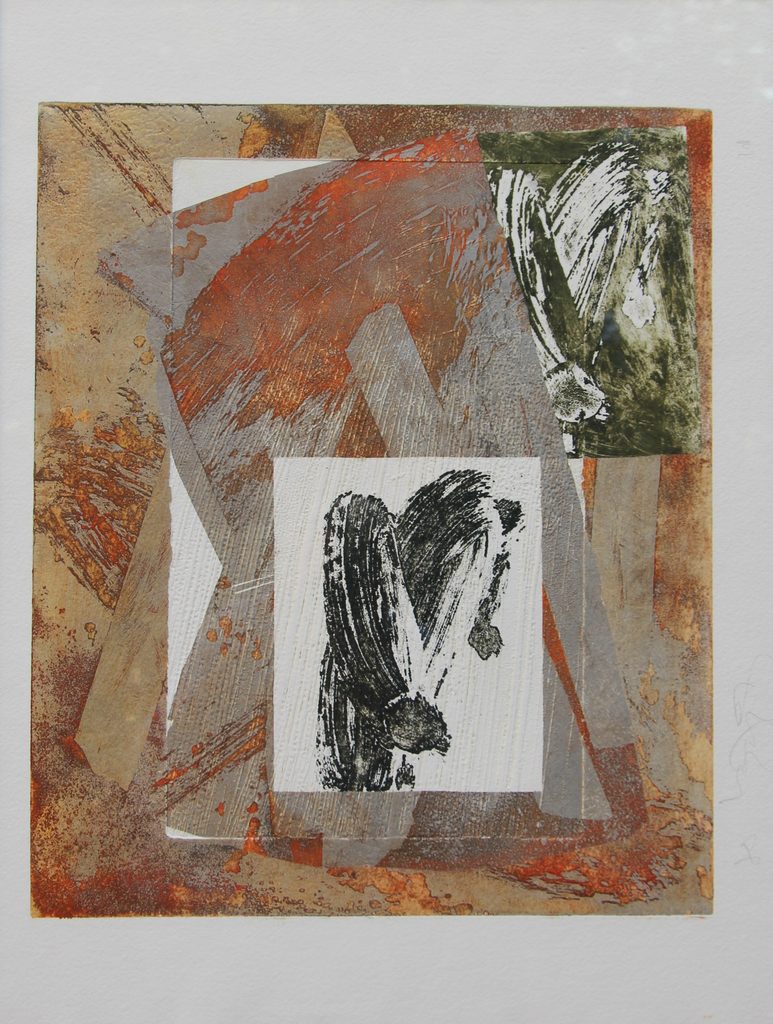
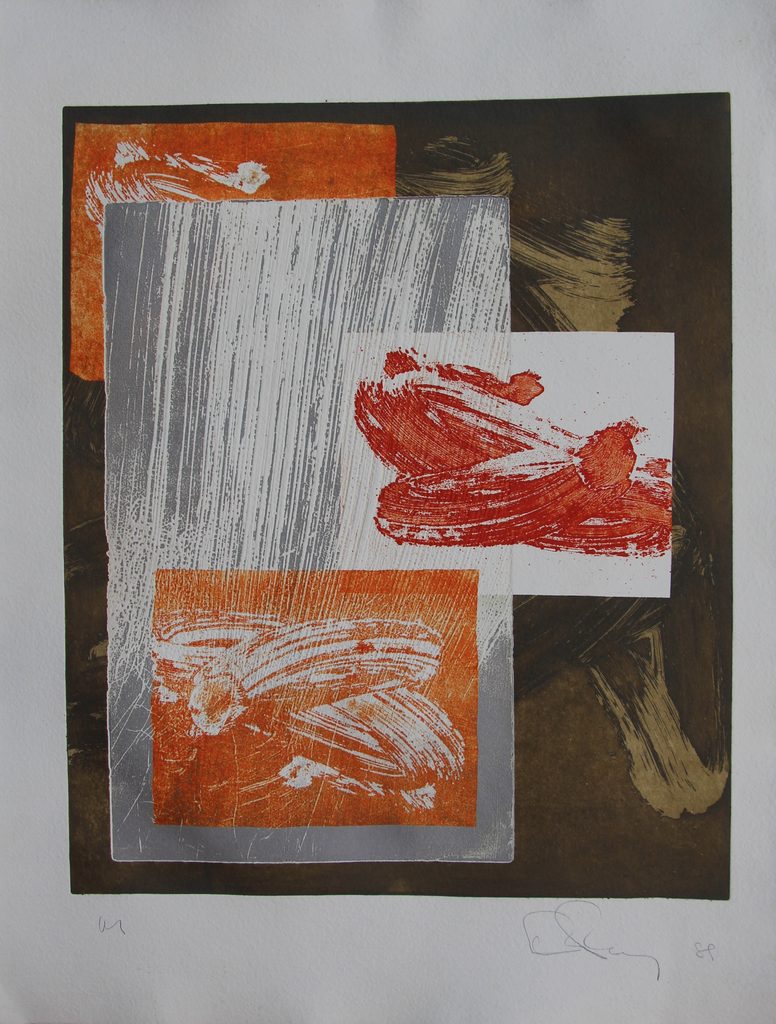
Pan de Guadix. 1989.
Seville. A series of monotypes produced from steel plates in the printmaking studio of Antonio Damián in Seville. Printed on 600 g handmade paper, the works combine overlapping impressions, scratched surfaces and gestural marks. The successive layers create compositions in which geometric structures interact with the spontaneity of the printed gesture.