2020s
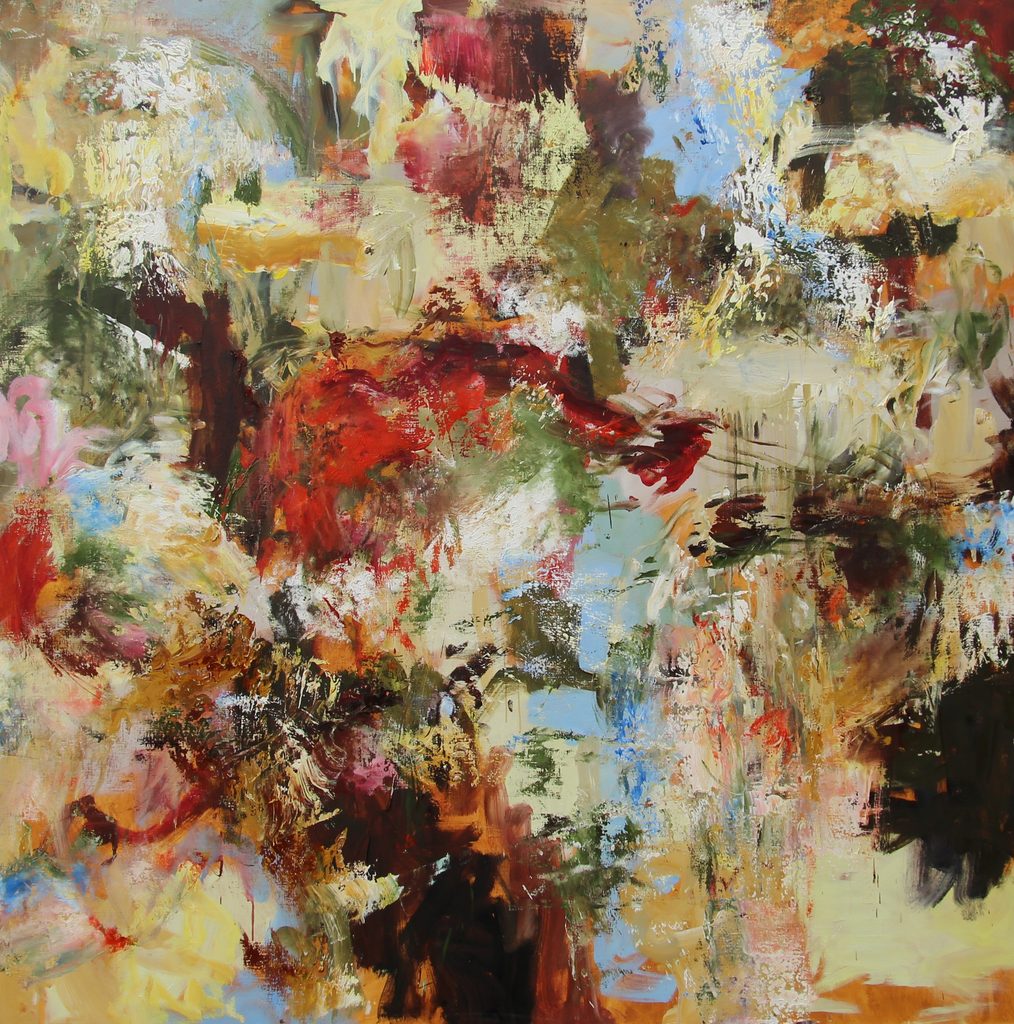
Chance. 2020
Nerja. Oil on linen. 195 x 195 cm.
Exhibitions: Casa Fuerte Bezmiliana, Rincón de la Victoria, 2020. Zephyrus, Diputación de Málaga, 2022.
The title came from “Chance”, Xu Zhimo, edited by Nicole Chiang, Oleander Press
We came across each other in a dark night on the sea,
You on your way, I on mine,
Remember if you will,
Or better still, forget,
The light exchanged in this encounter.
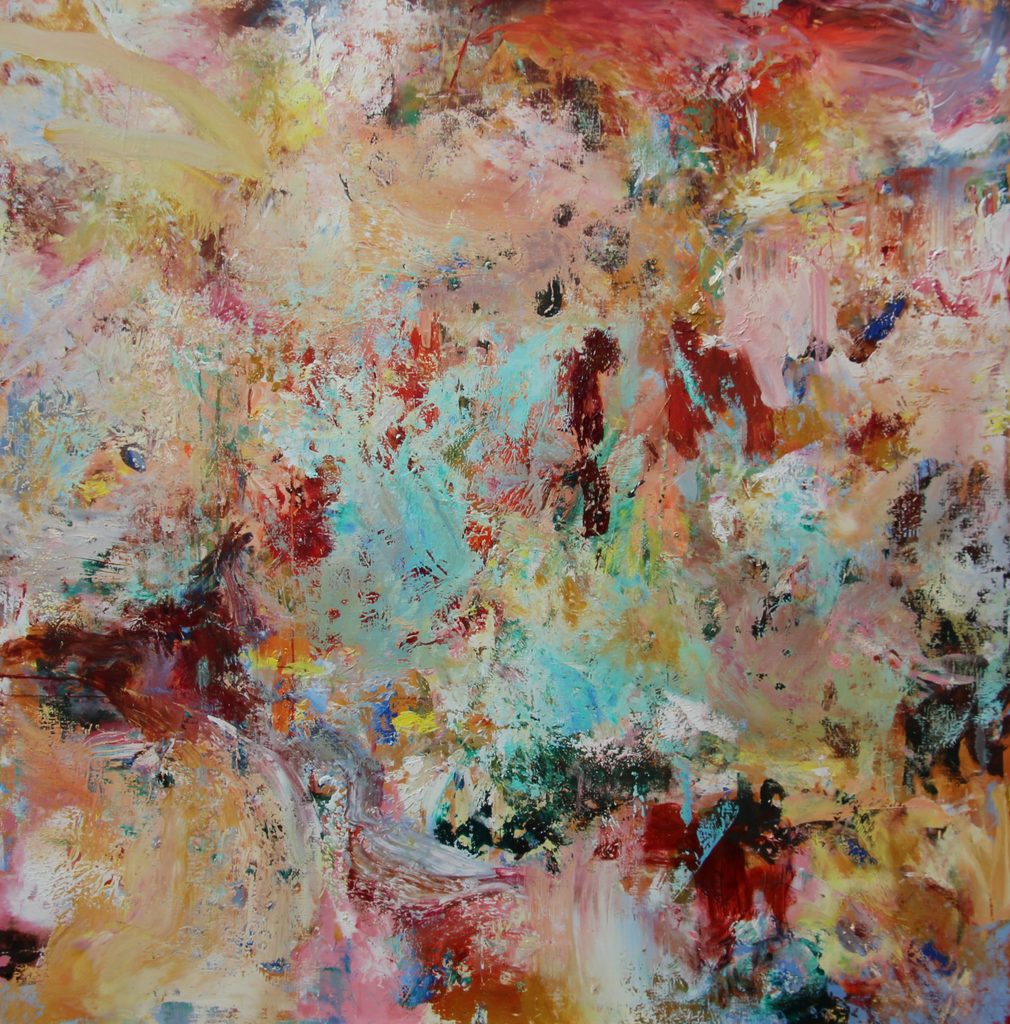
Longing. 2020
Nerja. Oil on linen. 195 x 195 cm.
Exhibitions: Casa Fuerte Bezmiliana, Rincón de la Victoria, 2020. Zephyrus, Diputación de Málaga, 2022.
There exists a longing,
should we kill it, drag it into reality.
From Åsa Eriksson, “Svårläst”.
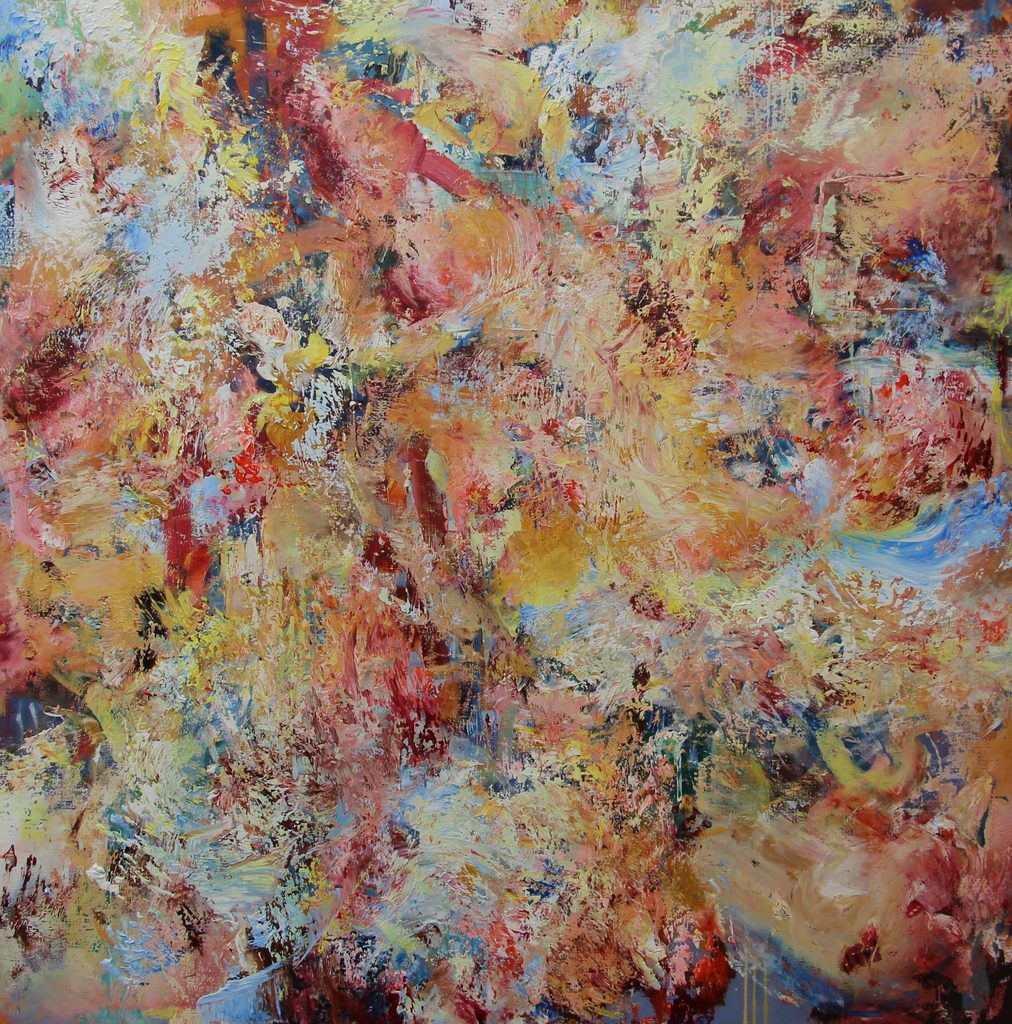
The Apple Orchard. 2020.
Nerja. Oil on linen, 195 x 195 cm.
Title from “The Apple Orchard”, Rainer Maria Rilke.
Exhibitions: Casa Fuerte Bezmiliana, Rincón de la Victoria, 2020. Zephyrus, Diputación de Málaga, 2022.
From feeling and feeling recollected,
From new hope and half forgotten joys,
And from an inner dark infused with these;
Issues in thought as ripe as windfalls scattered.
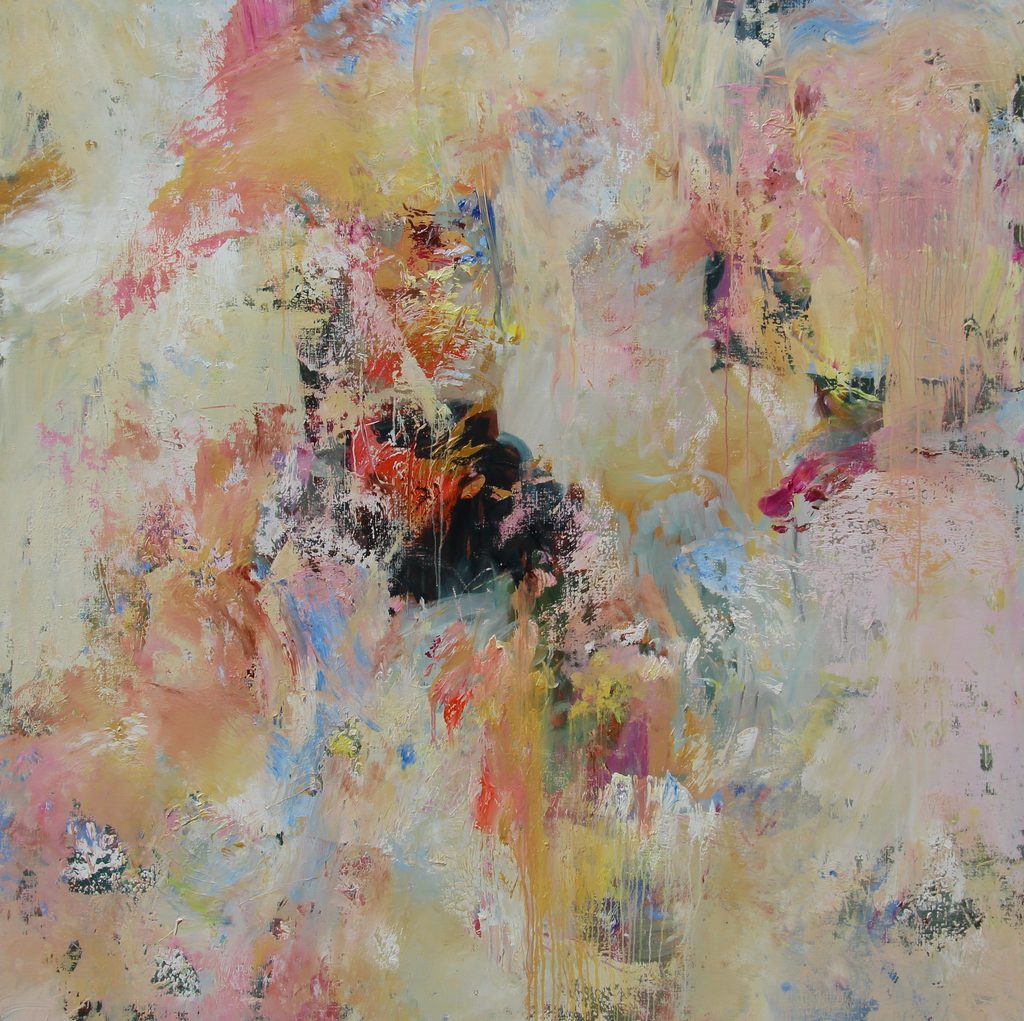
Another time. 2020
Nerja. Oil on linen. 195 x 195 cm.
Exhibitions: Casa Fuerte Bezmiliana, Rincón de la Victoria, 2020. Zephyrus, Diputación de Málaga, 2022.
someone will remember us
I say
even in another time.
Sappho
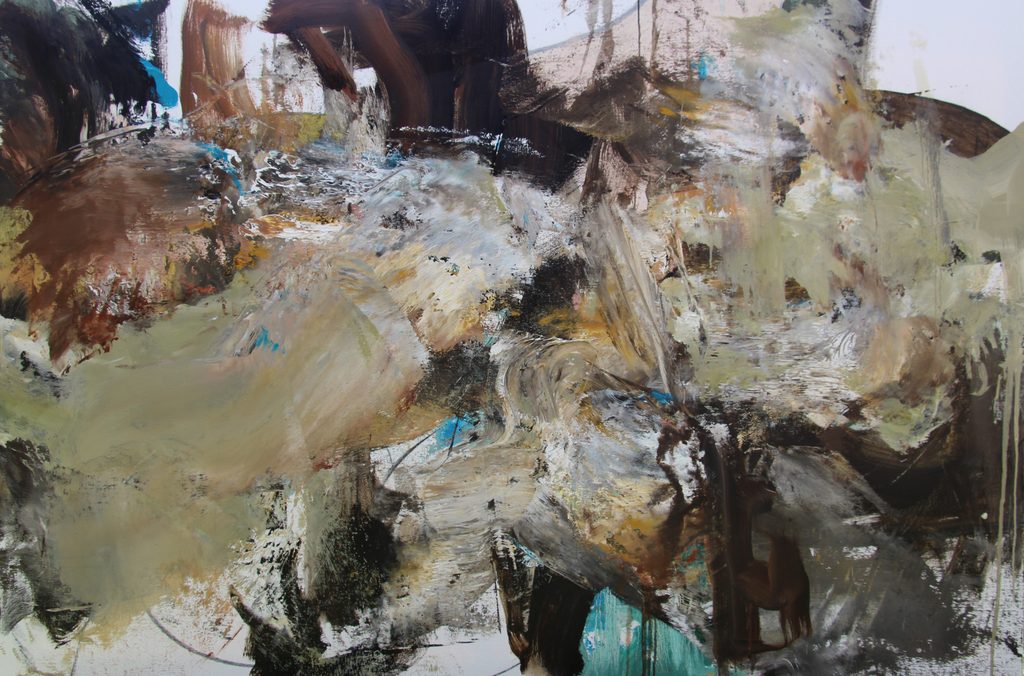
Everything sings. 2020
Nerja. Oil on linen. 195 x 195 cm.
Everything sings. You shall remember this.
Travel on!
From “The Station”, Thomas Tranströmer
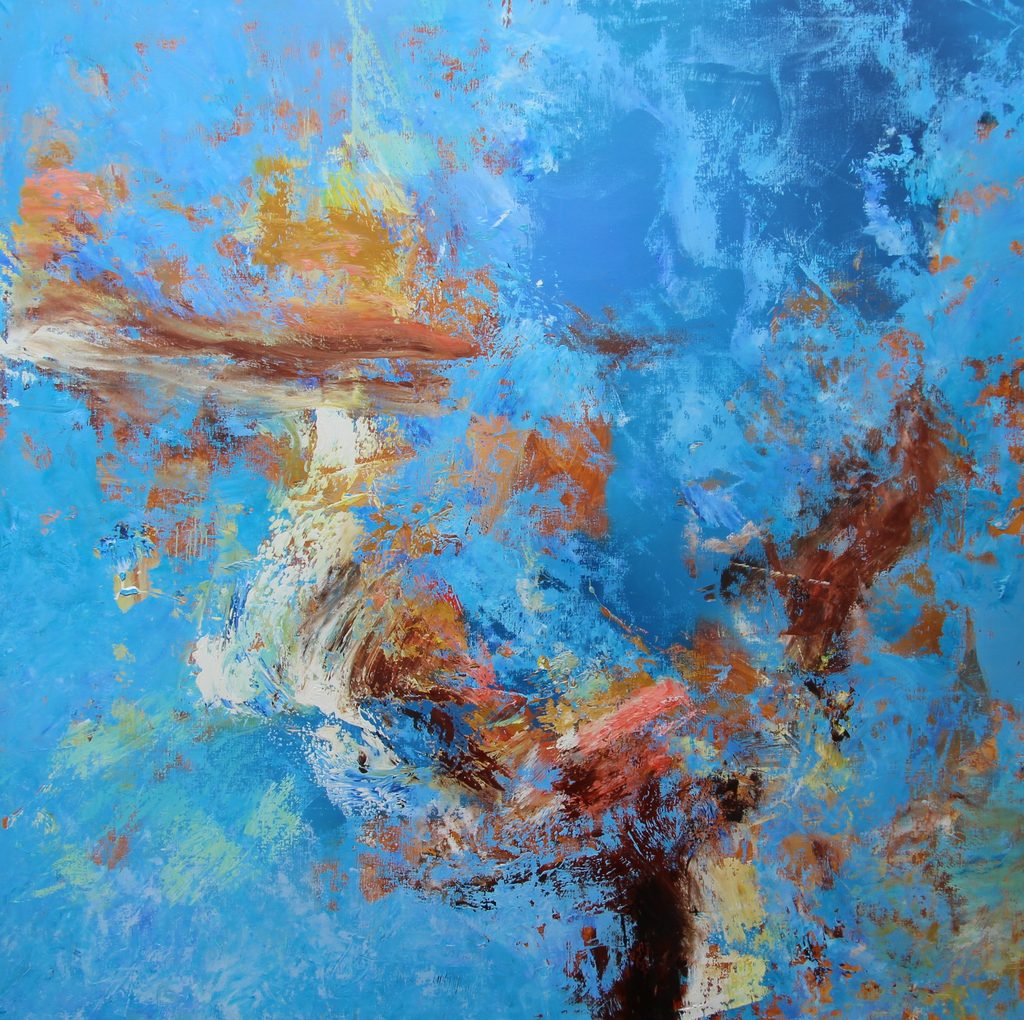
The elusive search of Chretiens. 2020
Nerja. Oil on linen. 195 x 195 cm.
From “Perseval, the Story of the Grail”, Chrétien de Troyes.
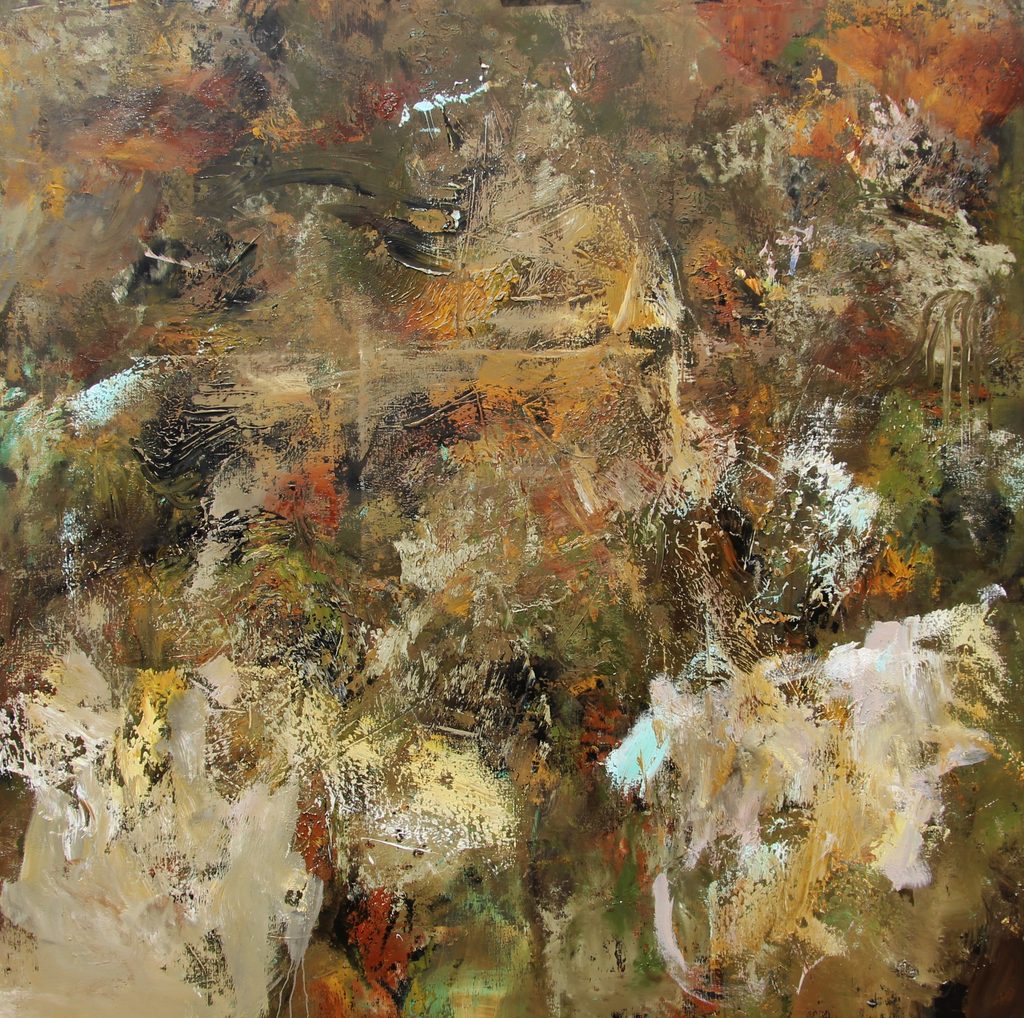
Double Scen. 2020
Nerja. Oil on linen. 195 x 195 cm.
No lower limit, no foundation, no seat.
Proklos, fr 66 Kern. From Håkan Rehnberg, Dubbel Scen, Kykeon.
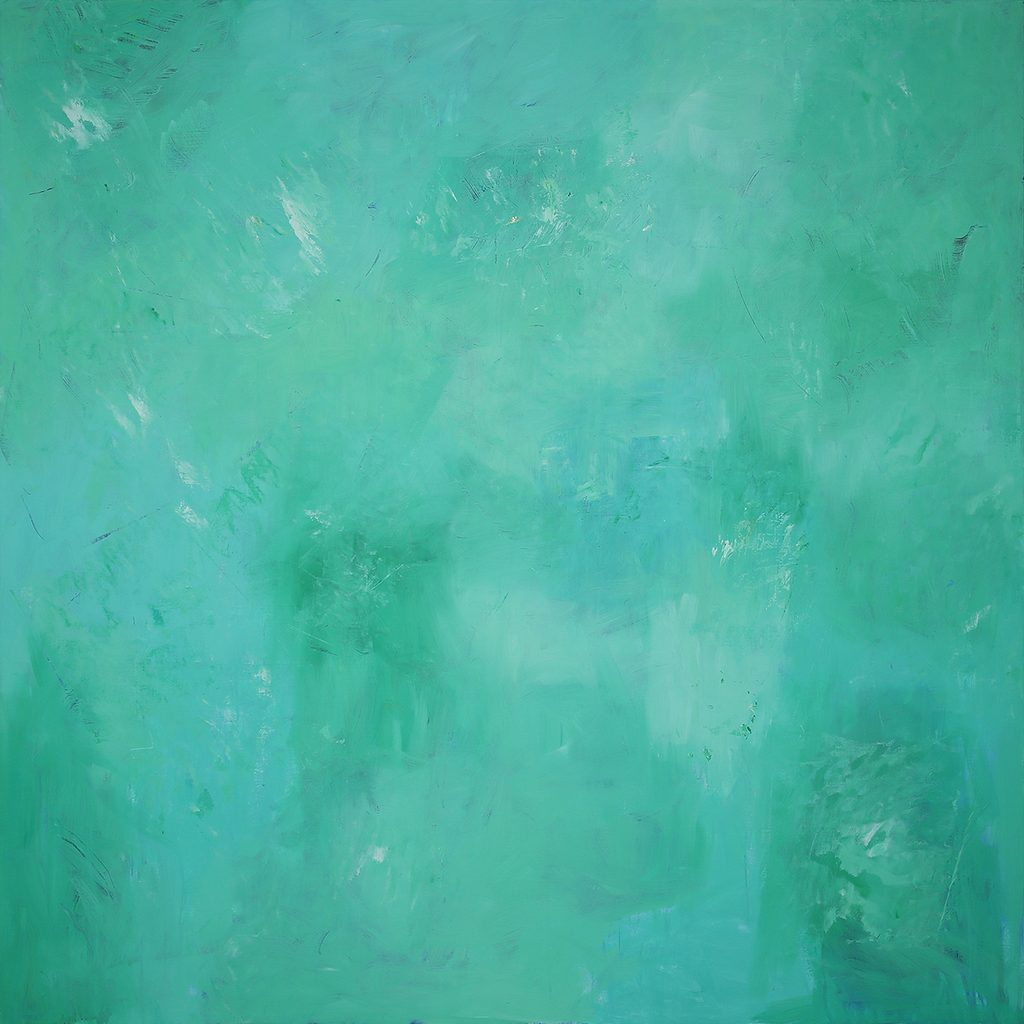
From Snake Island – Go fuck yourself. 2022
Nerja 2022. Oil on linen. 195 x 195 cm.
In February 2022, during the first days of the Russian invasion of Ukraine, a Russian warship approached Snake Island in the Black Sea and demanded that the Ukrainian defenders surrender.
Their response was: “Russian warship, go fuck yourself.”
The incident stayed with me, and I borrowed the words for the title of this painting.
The painting developed through successive layers of green and turquoise, with traces of earlier gestures remaining visible beneath the surface.
I kept the title.
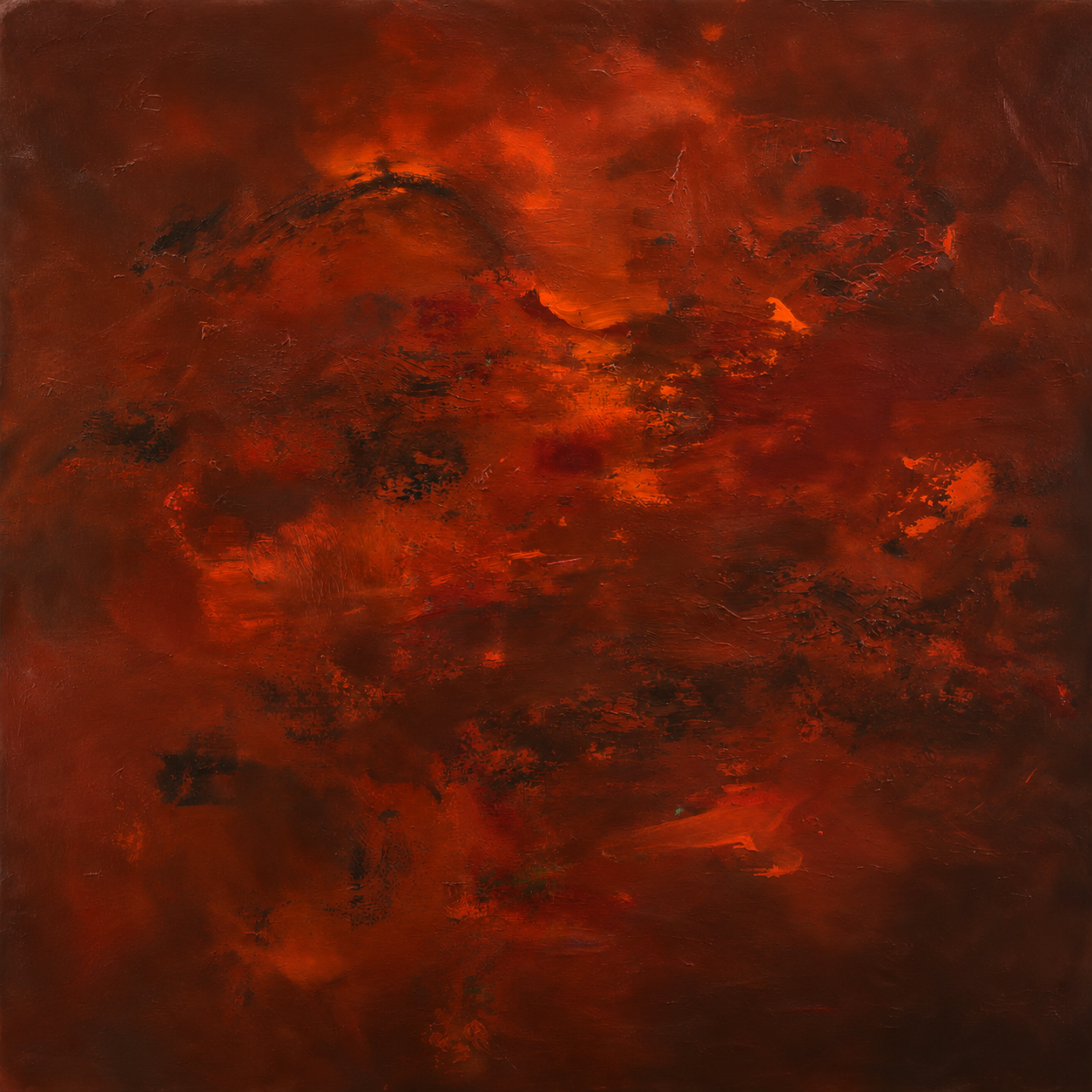
Consequences of War. 2022
Nerja. Oil on linen. 195 x 195 cm.
The title comes from Peter Paul Rubens’s The Consequences of War, painted between 1637 and 1638, during the Thirty Years’ War.
In Rubens’s painting, Mars, the god of war, advances through a scene of destruction, dragging Europe towards catastrophe. Venus attempts to restrain him, while figures representing the arts, learning and human life are trampled in his path.
Nearly four centuries later, war had once again returned to Europe.
I borrowed Rubens’s title, but not his imagery. There are no figures, no weapons and no recognisable landscape in my painting. The canvas is built from deep reds, dark passages and successive layers of paint, with gestures and marks appearing and disappearing beneath the surface.
Rubens needed figures to tell his story. I had only colour and the movement of paint.
The title remained the connection between the two.
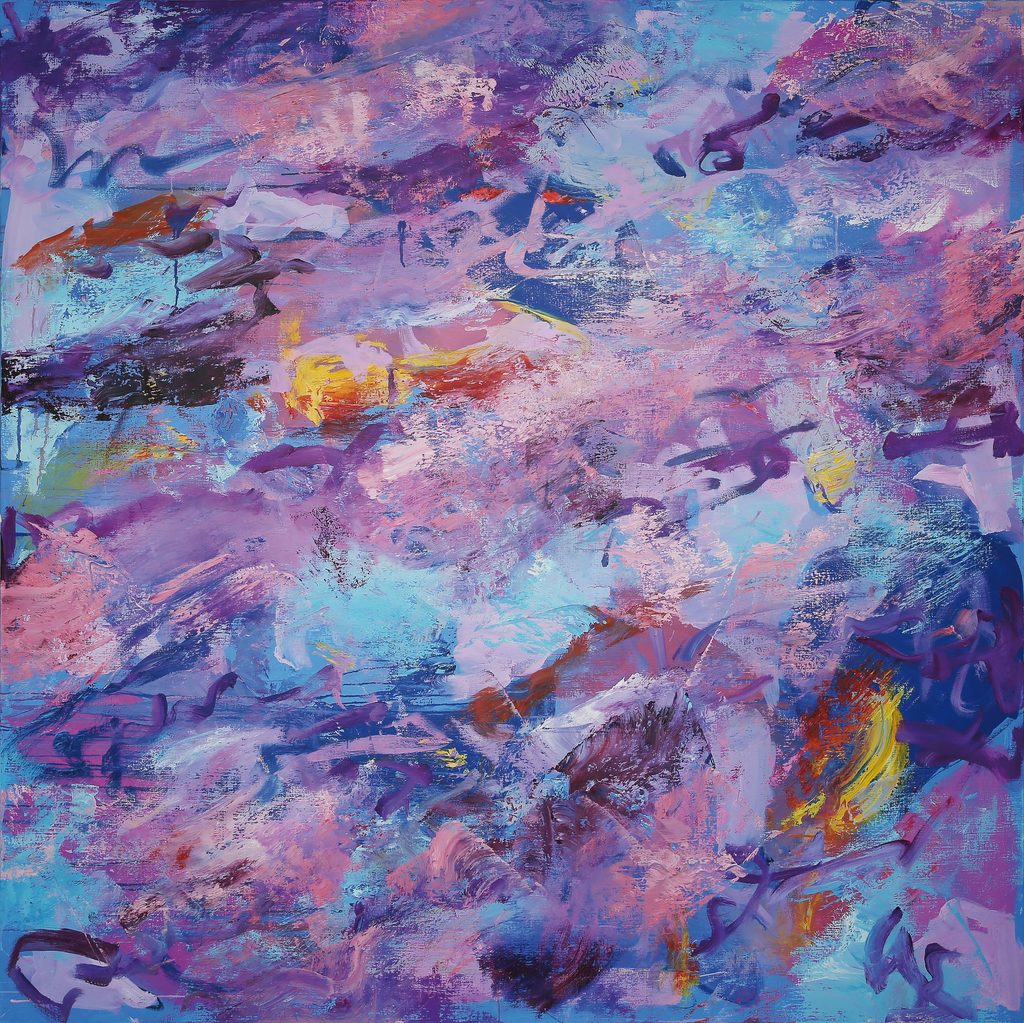
Je est un autre. 2023
Arthur Rimbaud, 1871.
When I painted this work, I had no particular image or intention in mind. It developed through the process of painting, one gesture following another.
But when I finished, the painting frightened me. It was too wild, too uncontrolled. What disturbed me was not the painting itself, but the realisation that all this had come out of me. I had discovered something within myself that I did not recognise.
It was only later, when the painting was exhibited in The Blue Butterfly, that something changed.
For the first time, I could stand at a distance and see the entire canvas. And suddenly, what had frightened me appeared completely different.
I saw beauty.
The painting had not changed. Only my way of seeing it had.
I borrowed the title from Arthur Rimbaud, who wrote in 1871: Je est un autre — I is another.
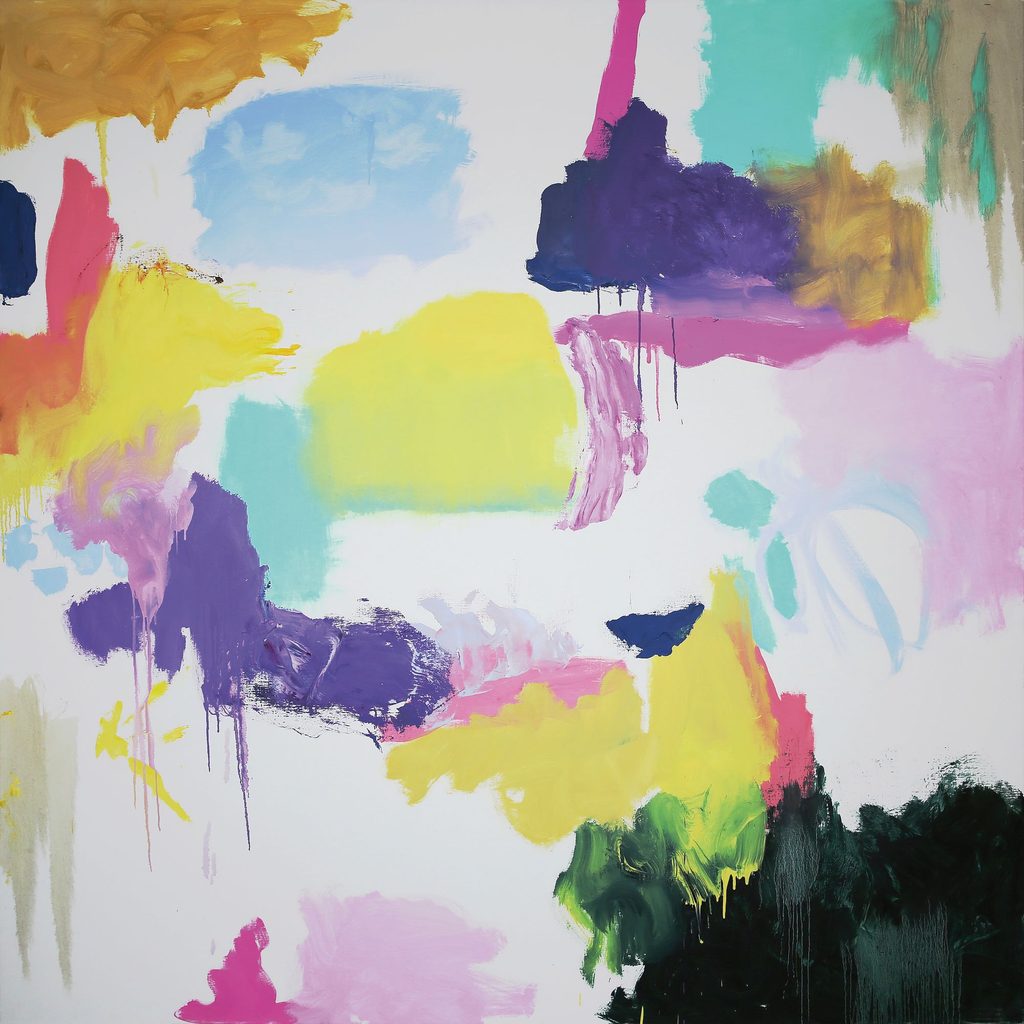
The Blue Butterfly. 2022.
Nerja. Oil on linen. 195 x 195 cm.
Like many of my paintings, this one began as a spontaneous play with paint, without any preconceived image or intention.
Then, quite unexpectedly, I noticed a little blue butterfly near the lower right centre of the canvas.
Suddenly, the painting became a landscape. The butterfly was fluttering through an imaginary world of sunny yellows, blue and violet clouds, with something dark and threatening beneath it.
None of this had been planned. The butterfly appeared first, and the landscape revealed itself around it.
It was a playful painting, and I enjoyed the unexpected discovery.
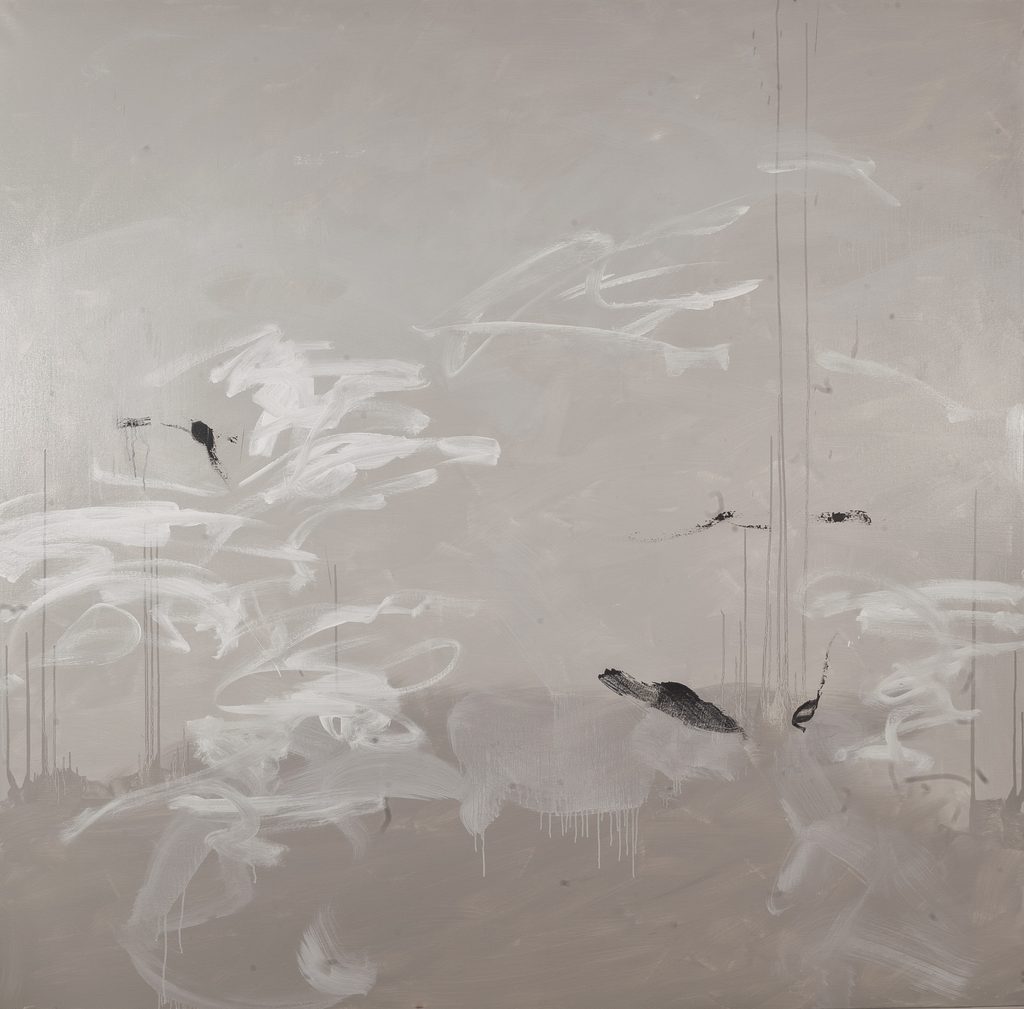
Water Birds. 2023
Nerja. Oil on linen. 195 x 195 cm.
This painting began upside down.
As with many of my paintings, I started without a particular image in mind, allowing the paint to develop freely. At some point, I turned the canvas around, and suddenly everything changed.
The darker area at the bottom became a pond, the long drips of paint turned into reeds, and the little black marks became frogs leaping out of the water.
All that was missing were the birds. I painted them swimming on the water and taking off in flight.
Shortly before, I had visited the studio of my friend, the sculptor Robert Harding. He had just completed a sculpture called Water Birds.
And so my painting found its title.
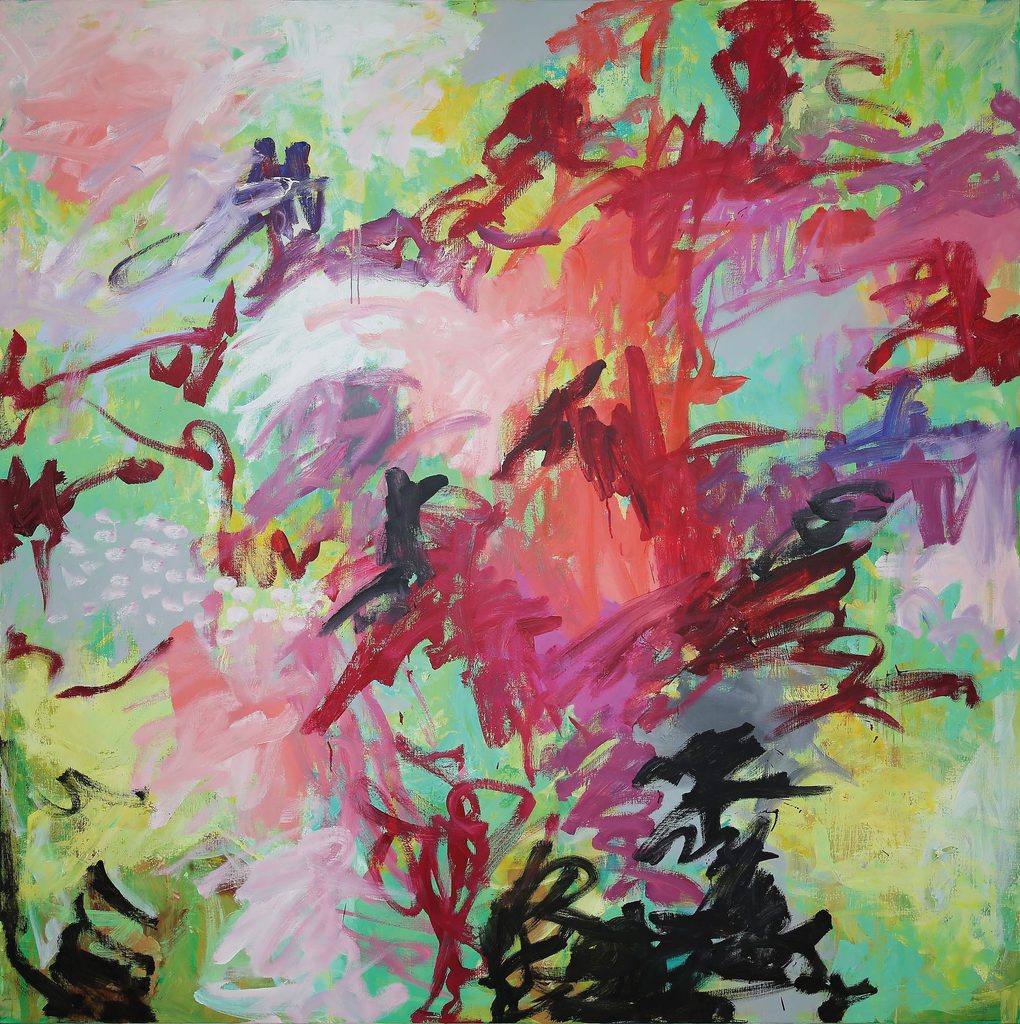
Ahora bien. 2022
Nerja. Oil on linen. 195 x 195 cm.
In Water Birds, I had begun to free my brushwork, allowing the gestures to develop without trying to control them.
In this painting, I went further. I let the brushstrokes scream.
The colours and gestures collided, crossed one another and spread across the canvas. I allowed them to go wherever they wanted.
But when I stood back and looked at what I had done, I found myself wondering what to do next.
Ahora bien…
Now what?
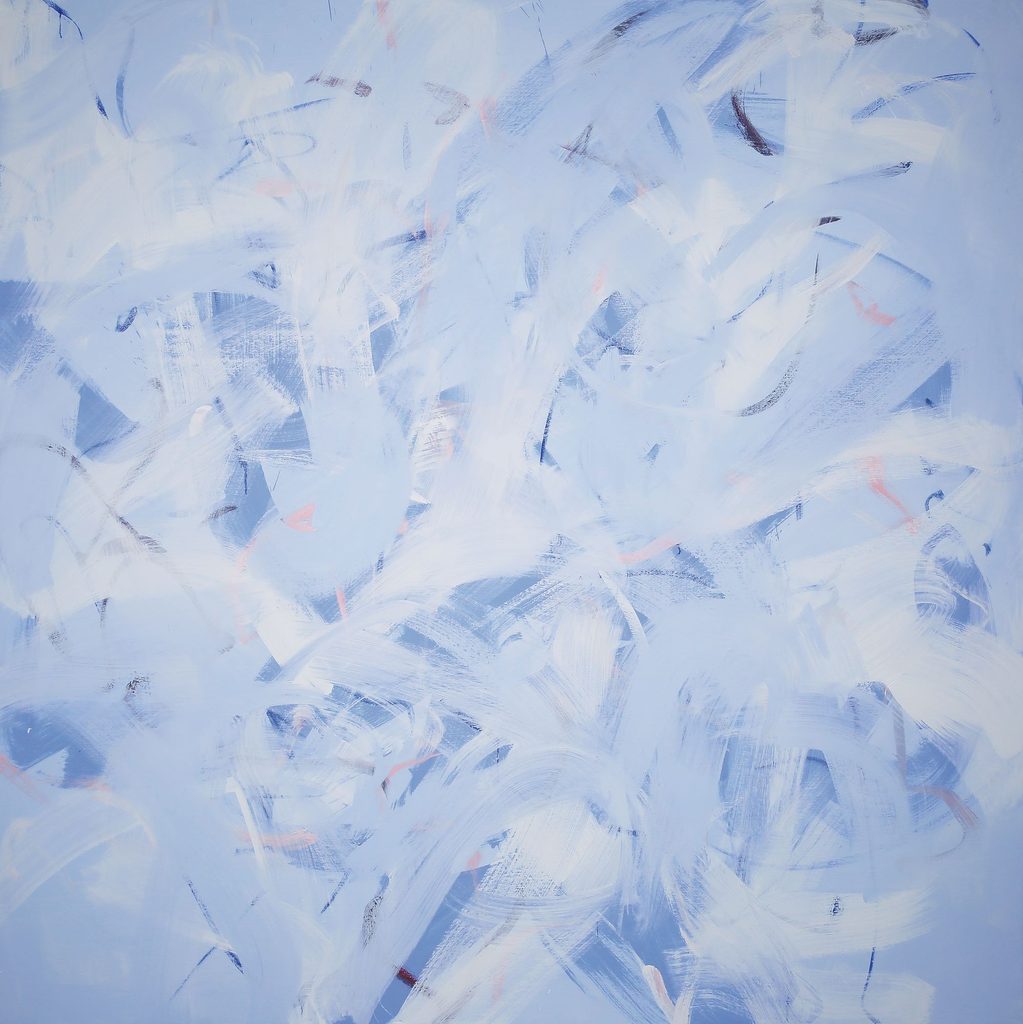
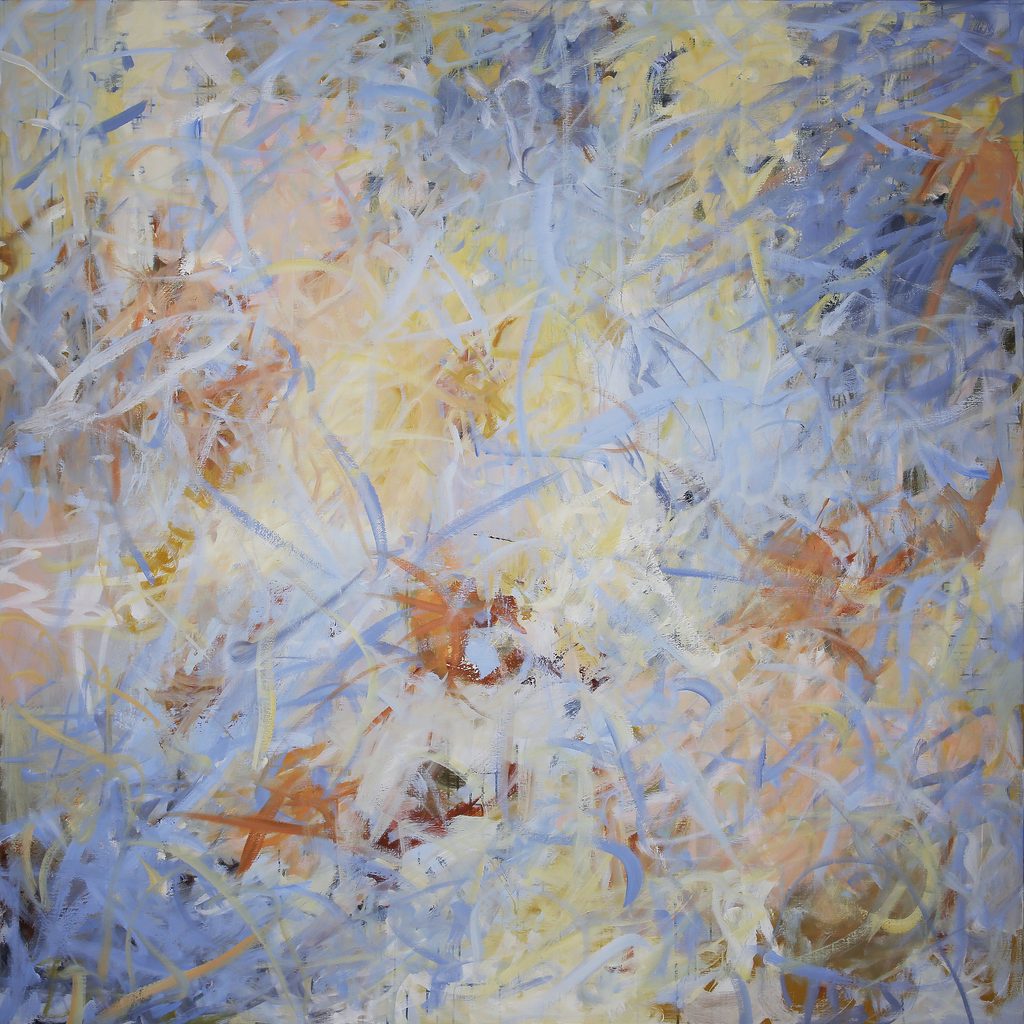
Infinitud. 2023
Nerja. Oil on linen. 195 x 195 cm.
After the exuberance of Ahora bien, I found myself painting something altogether calmer.
I began with a darker blue, applied with a broad brush. Gradually, lighter layers followed. Between them, I introduced fine strokes of violet and pink, using much smaller brushes to cross the surface.
Finally, I returned to the broad brush, applying an almost white layer over everything that had come before.
Yet nothing was entirely concealed. The earlier gestures remained visible through the successive layers.
The painting can be approached in two ways. From a distance, it appears as a quiet, almost continuous field of pale blue and white. But closer inspection reveals an intricate world of overlapping gestures, colours and movements.
You can enter the painting and explore its layers, following one gesture into another, or stand back and contemplate it as a whole. Neither view exhausts what is there.
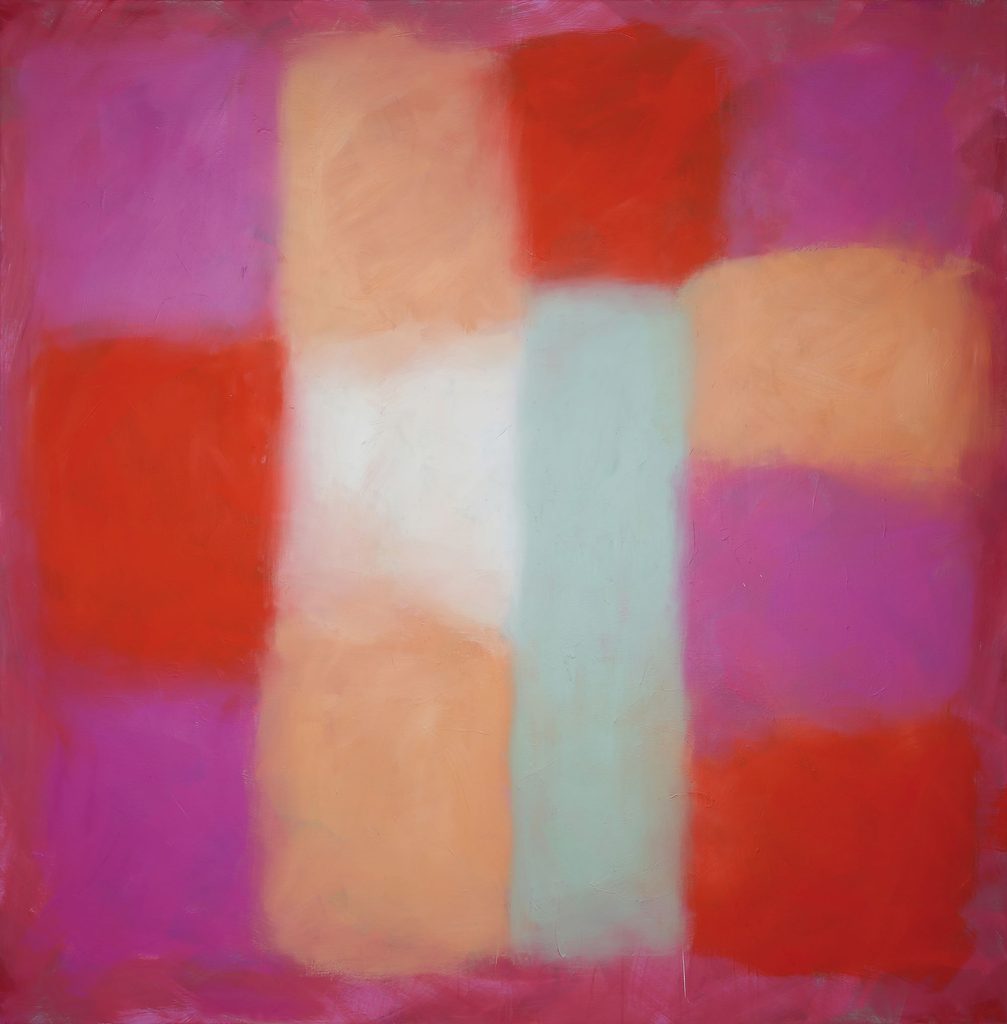
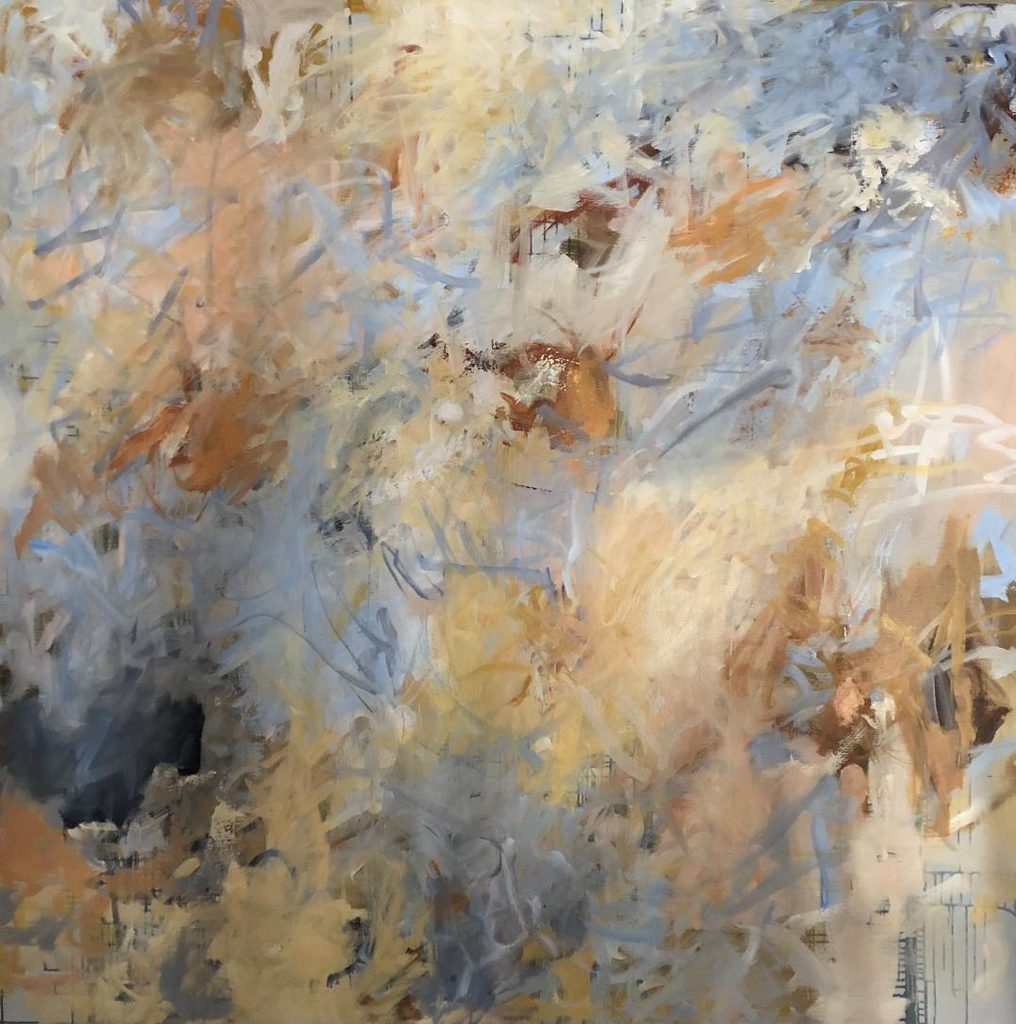
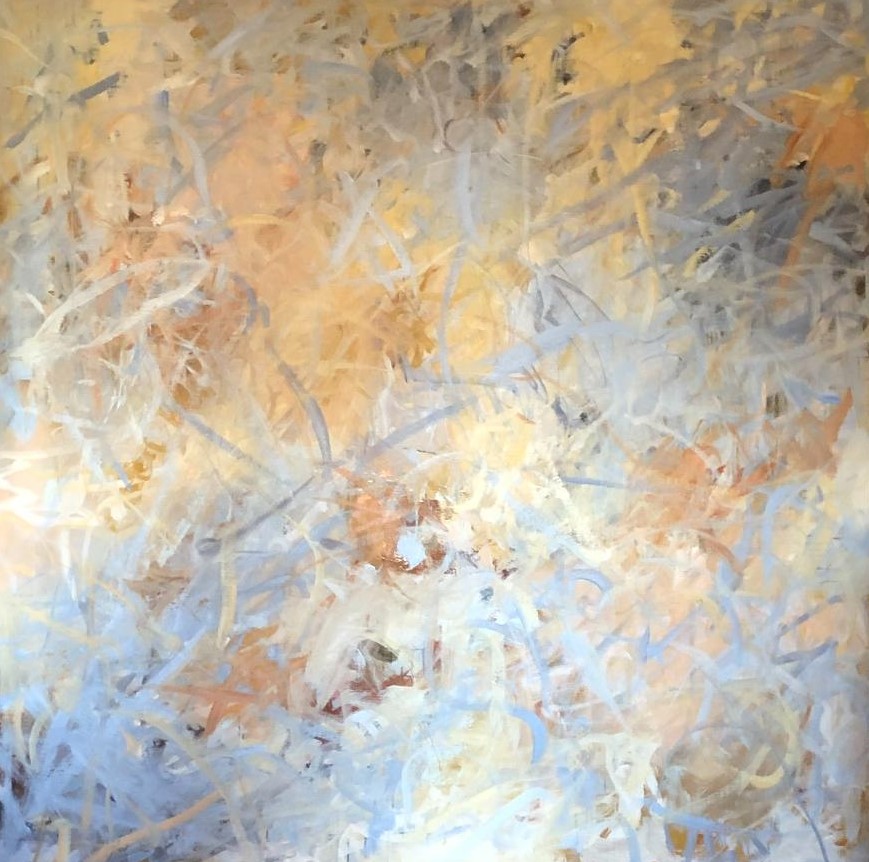
M I. 2023
Nerja. Oil on linen. 195 x 195 cm.
After the cool blues of Infinitud, I returned to colour.
I began with an almost silvery red background, working and reworking the surface without finding what I wanted. The introduction of a light violet changed everything, and gradually the painting began to develop.
The greatest difficulty was achieving the soft, irregular edges. I wanted the colours to float, their boundaries dissolving without losing their individual presence.
The title has a private origin.
Sometimes, something entirely unexpected happens in an ordinary moment. A movement, a gesture, something that lasts no more than a second, can suddenly change the way we feel.
This painting is dedicated to the memory of such a moment.
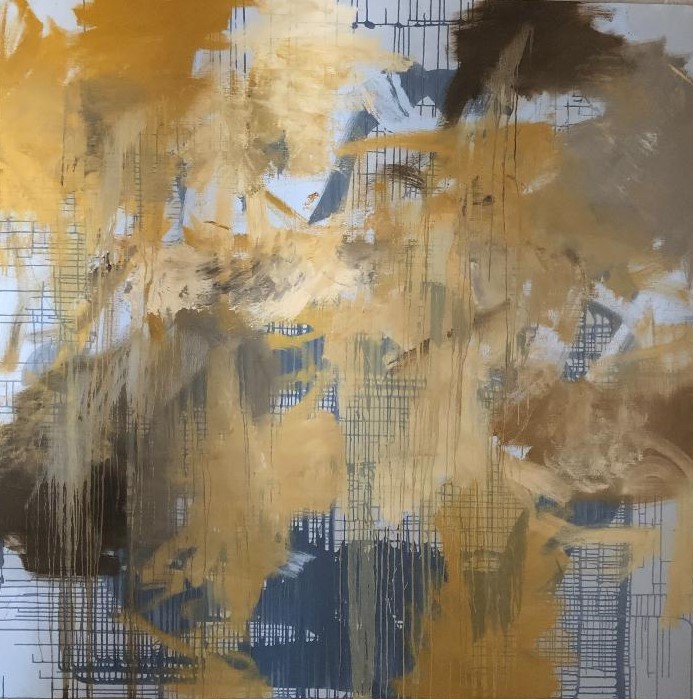
Y la razón permanece serena. 2023
Nerja. Oil on linen. 195 x 195 cm.
In this painting, everything somehow came together.
I had asked my sister to bring me some particular brushes from Stockholm. They were hog-bristle brushes, known in Spanish as lengua de gato, about three centimetres wide, with long bristles and mahogany handles.
They were a pleasure to work with.
Their shape and flexibility allowed me to make long, sweeping gestures across the canvas. The paint followed the movement of my hand, leaving broad, soft strokes that crossed and overlapped one another.
Gradually, the surface filled with pale blues, yellows, whites and warmer passages of colour, the earlier layers remaining visible beneath the later ones.
As the painting developed, something else emerged. The surface began to shift between lighter and darker fields, creating the impression of sunlight playing across the canvas. This movement of light exists independently of the individual brushstrokes, giving the painting another dimension when viewed as a whole.
There was no particular image I was trying to achieve. I simply enjoyed the movement of the brushes and the way the colours came together.
Sometimes painting is a struggle. This time, it was a pleasure.
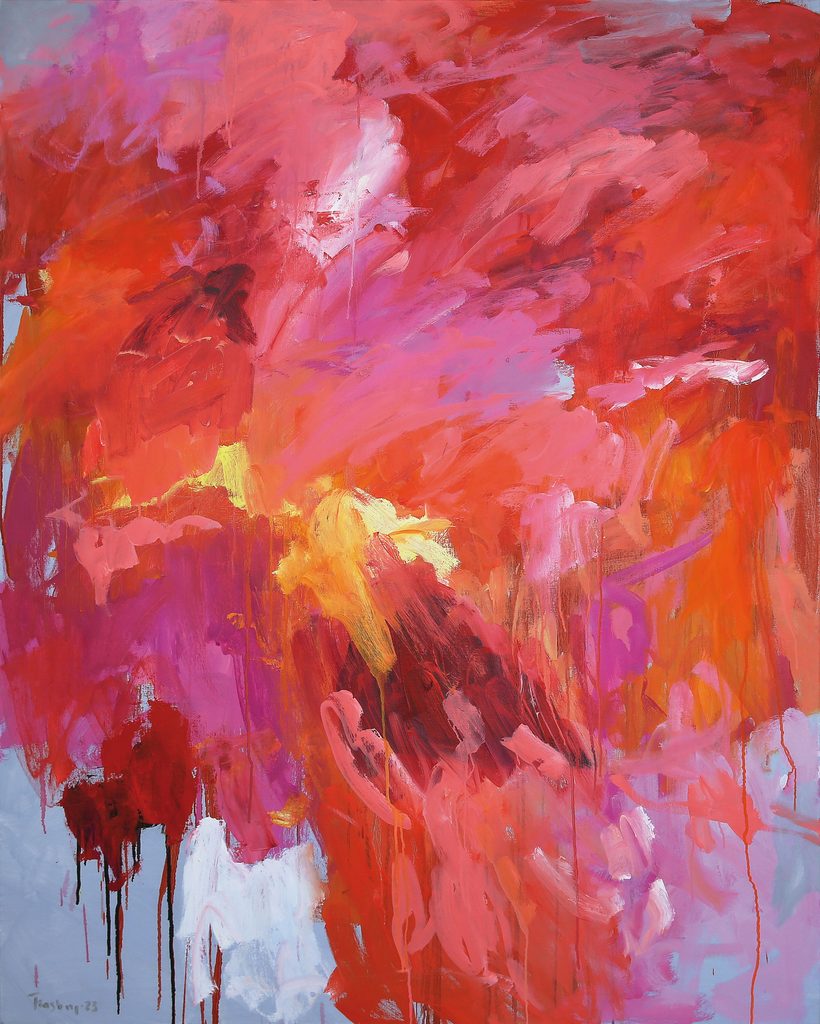
Untitled. 2023
Nerja. Oil on linen. 146 x 114 cm.
This painting came together quite rapidly.
I began with a grey background and worked in two successive layers. In the first, I was still searching, allowing the colours and gestures to find their way across the canvas.
By the second layer, something had changed. I knew what I wanted to do.
The brushwork became confident and energetic, building on what I had discovered in the paintings that preceded it.
There was no need to continue working. The painting was finished.
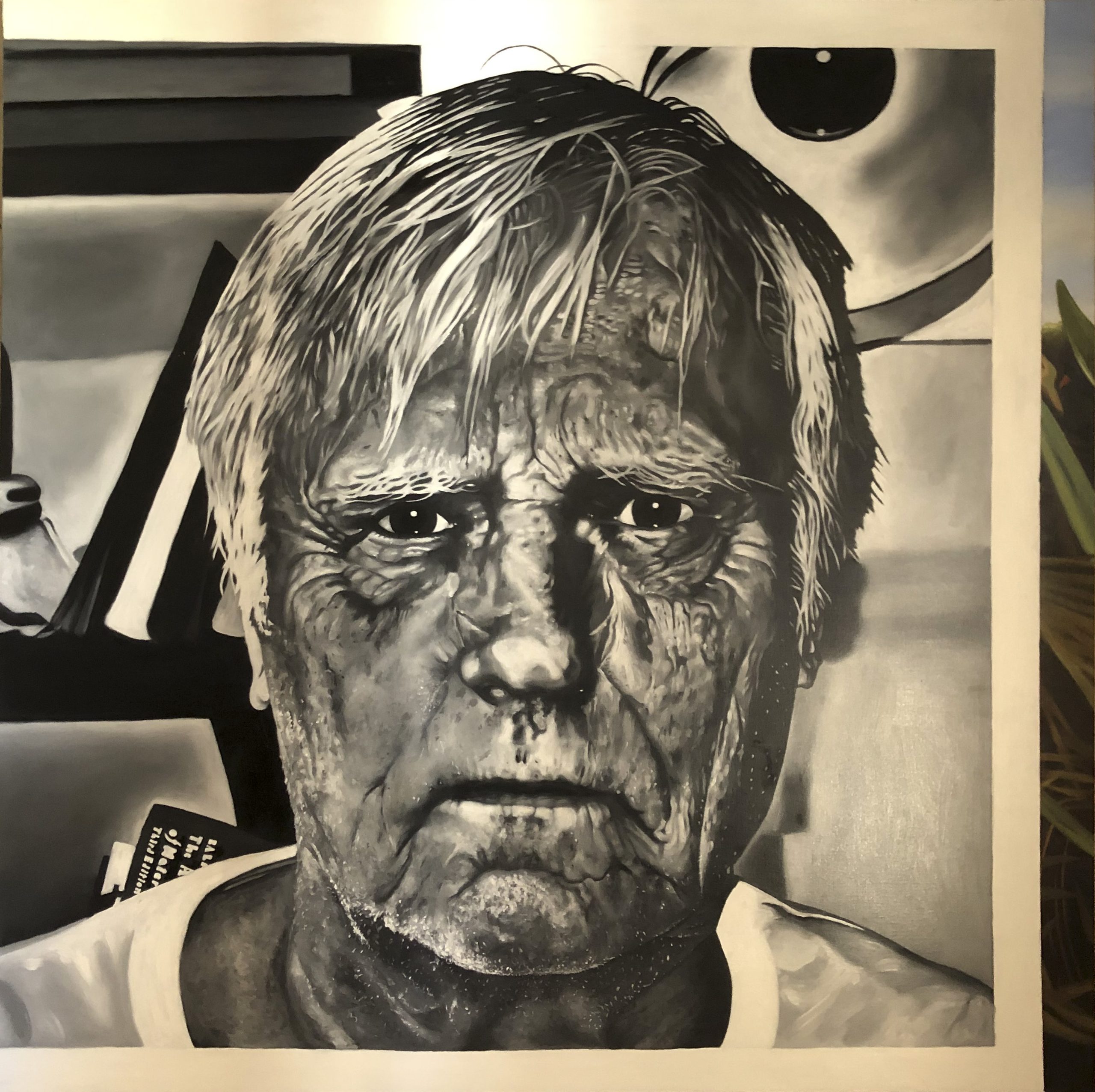
Third Edition. 2024
Nerja. Oil on linen. 195 x 195 cm.
This self-portrait was painted in my small studio in Nerja.
Behind me are objects from my everyday working environment. Above my head is a lamp, positioned to suggest a third eye. There is also a whitewash brush, traditionally used to paint the houses of Andalucía’s white villages. For me, it represents the place where I have lived for so many years. It is also a tool that has found its way into my own painting practice.
Among the objects is a copy of Ralph Mayer’s The Artist’s Handbook of Materials and Techniques, Third Edition, a reference work that has accompanied me through much of my life as a painter.
The title comes from that book, although it also seemed appropriate for a self-portrait made at seventy-five.
Through the studio window, a narrow strip of landscape is visible. In reality, vegetation blocks almost the entire view, leaving only a small opening towards the distant hills and sky.
And then there is the face.
I made no attempt to soften it. Every wrinkle, every fold of skin, every mark left by the passing years is there. Nothing concealed, nothing corrected. The painting is large enough for all these details to become almost a landscape of their own.
I have painted self-portraits before, at different stages of my life. This one records what I looked like in 2023, surrounded by the things that had become part of my daily existence.
Third Edition seemed a suitable title.